Geoswift and SKUx push stablecoins beyond treasury flows into programmable commerce rails
Geoswift and SKUx say they are launching a programmable stablecoin commerce network aimed at linking cross-border settlement with item-level merchant controls. The initiative matters because it tries to move stablecoins from back-office treasury infrastructure into rules-based commerce execution at checkout.
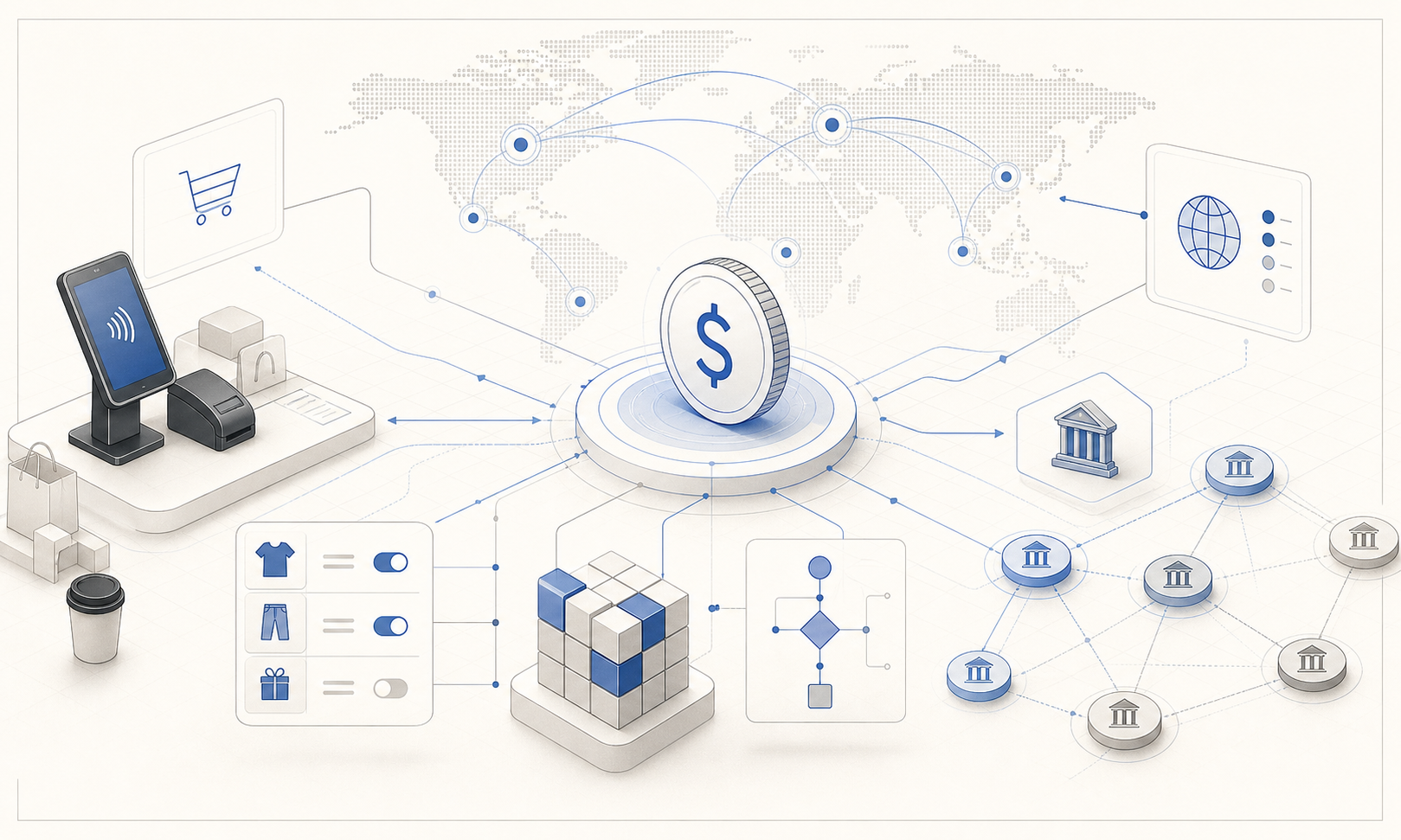
Stablecoin infrastructure is usually discussed in terms of treasury management, remittance speed or cross-border settlement. The new Geoswift-SKUx partnership is interesting because it is trying to extend that stack one layer further, into the commercial logic of a purchase itself. The companies said they are launching a programmable stablecoin commerce network designed to connect digital-asset settlement with merchant-side controls, a structure that points toward a more operational role for stablecoins in real-world payments rather than a narrower role as a balance-sheet tool.
According to the companies’ announcement, the network is meant to bridge digital assets, traditional finance and real-world commerce in a single flow. Their framing is not just about allowing a payer to use stablecoins at a merchant endpoint. It is about attaching rules to the payment itself, so funds can be routed with embedded controls tied to what is being bought, where the transaction is taking place and how the payment should be settled. The release also argues that this architecture is relevant for agentic commerce, where automated purchasing systems need tighter controls than a normal card or wallet transaction would provide. That is a notable distinction because it shifts the conversation from stablecoins as generic spending instruments to stablecoins as programmable transaction rails.
The Geoswift side of the partnership gives the story more weight than a simple pilot headline. On its official site, Geoswift describes itself as a cross-border payments company with a strong APAC footprint and says it builds customized payment connections across regions for business customers. Company materials also emphasize local licensing, regulatory navigation and on-the-ground market coverage across jurisdictions. Those capabilities matter because stablecoin commerce only becomes useful to larger merchants and platforms if the fiat side, payout side and compliance side can all be handled in the same operational chain. In other words, the hard part is not only putting a token onchain. It is stitching that token into a payment stack that can survive real settlement, reconciliation and regulatory scrutiny.
Geoswift’s own prior stablecoin work reinforces that this is not a first experiment with digital-dollar rails. In October 2025, the company announced an integration with Circle Payments Network to support real-time cross-border settlement using stablecoin infrastructure. That release described Geoswift as an originating financial institution in the network and said the setup was intended to deliver faster, compliant and more cost-efficient B2B payments. Circle’s official USDC materials describe the token as a fully reserved digital dollar built for near-instant settlement, 24-7 money movement and programmable financial flows. Taken together, those references suggest Geoswift has already been building around the settlement leg of stablecoins, and the new SKUx tie-up is better understood as an attempt to add the commerce and control layer on top of that base.
The SKUx portion of the model is what makes this more specific than another broad stablecoin-network claim. The companies said SKUx contributes a patented offers and payments platform and that its SKUPay technology is already embedded across a large share of major grocery and big-box point-of-sale environments in the United States. If that distribution claim holds up in production, the partnership could give stablecoin settlement a realistic path into merchant software that already understands product-level eligibility, incentives and payment routing. That is a very different proposition from asking merchants to bolt on a standalone crypto checkout button. It points instead to a system where stablecoin-funded transactions can inherit the same kinds of controls that retailers already use for coupons, benefits, restricted spend programs and targeted offers.
That distinction matters for RWA and stablecoin markets because programmable money has often been discussed in abstract terms. In practice, two different problems have to be solved. One is programmable settlement: moving value quickly, cheaply and with finality. The other is programmable spending: determining what the payment is allowed to do once it reaches a commercial endpoint. The Geoswift-SKUx structure is one of the clearer recent examples of a company pair trying to combine both layers. If it works, it would support the view that the next phase of stablecoin adoption will be less about headline transaction volume and more about whether tokenized dollars can plug into existing merchant controls, enterprise workflows and automated purchasing systems without breaking compliance or user experience.
There are still obvious execution questions. The announcement does not yet answer which stablecoins will be prioritized, how merchant adoption will be staged, what geographies will go live first or how open the network will be to third-party wallets and treasury systems. Those details will determine whether this becomes meaningful infrastructure or remains an attractive architecture diagram. Even so, the launch qualifies as a real RWA-relevant development because it tests a core industry thesis: that tokenized dollars become materially more useful when they are embedded inside operational payment software, not just held as digital cash equivalents. If Geoswift can bring licensed cross-border settlement capacity and SKUx can bring item-level merchant logic, the partnership could become an early template for how stablecoins move from crypto-native liquidity rails into programmable commerce infrastructure.