GENIUS Rulemaking Enters a New Phase as Stablecoin Compliance Debate Moves to Secondary Markets
A new comment push from Paradigm and the Hyperliquid Policy Center has sharpened the central implementation question in U.S. stablecoin policy: how far issuer AML and sanctions obligations should extend once tokens leave the mint-and-redeem edge and circulate through wallets and DeFi. Treasury’s proposal, Anchorage’s support and the latest industry objections show the market is now negotiating the exact compliance perimeter for regulated digital dollars.
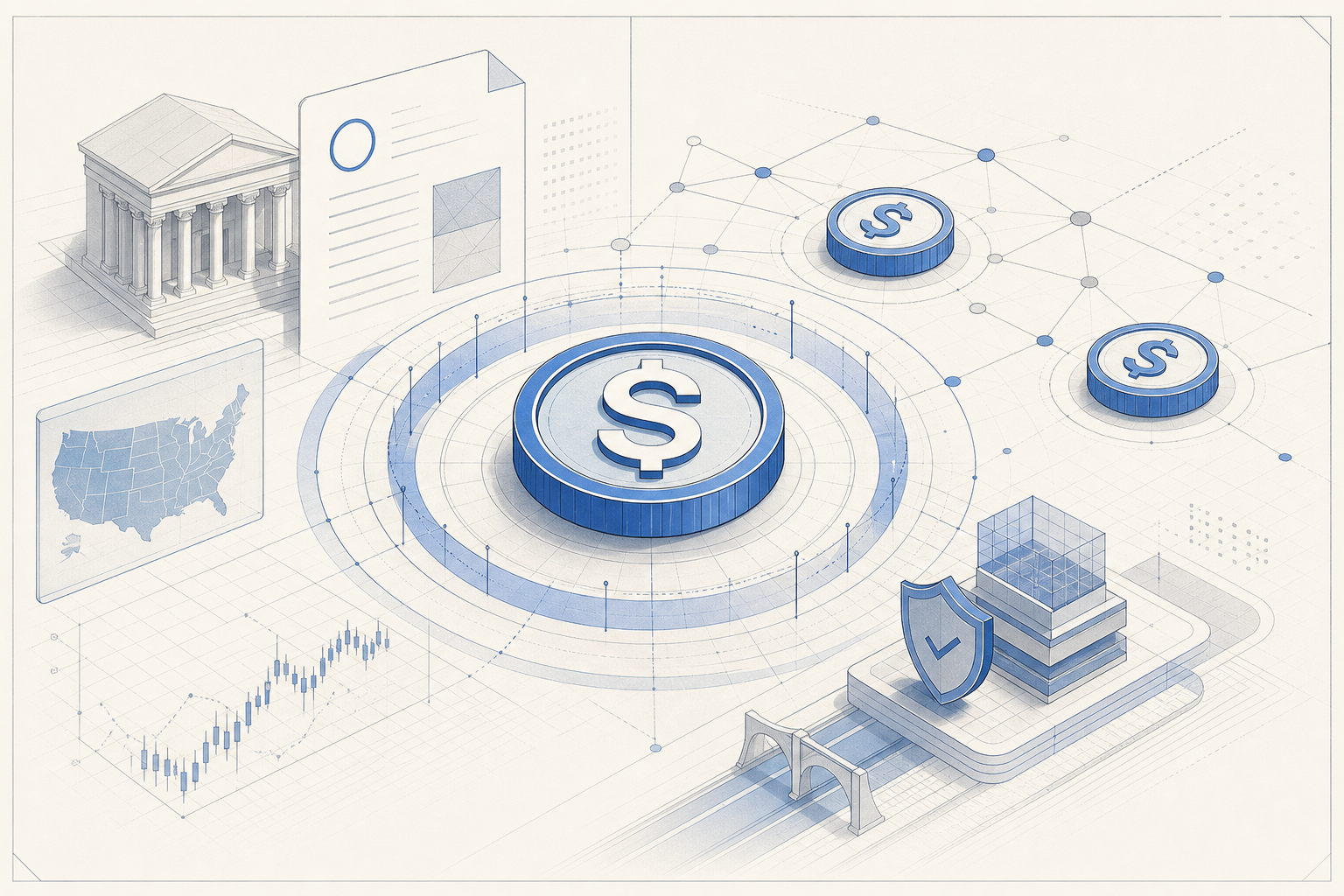
The U.S. stablecoin debate is moving out of the legislative phase and into the harder implementation work that will determine how regulated dollar tokens actually function in markets. A fresh round of public comments on Treasury’s proposed GENIUS Act rulemaking has brought one issue to the center: whether stablecoin issuers should be held responsible mainly for the customers they directly onboard, or whether their anti-money-laundering and sanctions obligations should extend deep into secondary-market activity once tokens are moving through self-custodied wallets, exchanges and decentralized finance protocols. For the RWA sector, that is not a technical footnote. It affects how compliant dollar liquidity can circulate across tokenized asset venues, trading systems and onchain settlement rails.
The immediate catalyst was a new objection from Paradigm and the Hyperliquid Policy Center, first surfaced in fresh reporting by Decrypt. The two groups warned that if issuers are effectively asked to police secondary-market activity they cannot see or control, U.S.-regulated stablecoins could become less usable on permissionless blockchain networks. Their argument is not that compliance should disappear. It is that primary issuance and redemption are meaningfully different from downstream token flows, where stablecoins may pass through ordinary wallets, automated protocols and validators that do not have a direct customer relationship with the issuer. In that framing, expanding issuer-style obligations too far could reduce the willingness of regulated stablecoins to circulate through open-market infrastructure.
Treasury’s own proposal shows why the issue has become so consequential. In April, Treasury, FinCEN and OFAC jointly proposed rules to implement the GENIUS Act’s anti-money-laundering and sanctions provisions. The agencies said the framework would treat permitted payment stablecoin issuers as financial institutions for Bank Secrecy Act purposes and require them to maintain effective AML and sanctions compliance programs. Treasury presented the proposal as a way to support innovation in payment stablecoins while protecting the U.S. financial system from illicit-finance risk. That framing is important because it confirms the policy direction: Washington is not debating whether stablecoins belong inside the financial perimeter, but how to draw the perimeter in a way that is enforceable and commercially workable.
One of the clearest supporting responses has come from Anchorage Digital, which published its own comment letter this week. Anchorage broadly backed the agencies’ approach and said the proposed architecture generally places AML responsibilities where regulated issuers have direct visibility. The firm highlighted a design in which AML monitoring, customer due diligence and suspicious activity reporting stay focused on the primary market, while sanctions obligations continue to matter across the full lifecycle of the token. At the same time, Anchorage asked Treasury to clarify several points, including secondary-market sanctions liability and other areas where the proposal could become difficult to operationalize. That makes Anchorage’s response useful because it shows that even industry participants broadly supportive of the rule still want narrower and more explicit boundaries.
Seen together, the comments map a more precise policy split than the market had a few months ago. Treasury wants regulated payment stablecoins to operate with the compliance discipline expected of systemically relevant dollar instruments. Anchorage is effectively saying that objective is achievable if the final rule follows a risk-based structure and does not impose strict liability for activity beyond the issuer’s control. Paradigm and the Hyperliquid Policy Center are pressing the same boundary from a different angle, warning that overly broad obligations could discourage regulated issuers from supporting permissionless DeFi at all. The shared theme is that secondary-market circulation is now the key design battleground, not whether stablecoin issuers should have compliance programs in the first place.
That debate has direct consequences for RWA platforms. Tokenized Treasuries, funds, private credit structures and other onchain financial products increasingly rely on stablecoins as the working cash leg for subscriptions, redemptions, collateral transfers and secondary trading. If U.S.-regulated stablecoins end up with operational constraints that make open-network distribution unattractive, some RWA activity could migrate toward more permissioned settlement models or continue leaning on offshore dollar tokens that sit outside the same framework. If the final rule preserves a workable path for compliant issuers to circulate on public chains, the opposite could happen: regulated dollar tokens could become more deeply embedded in tokenized capital-markets workflows. Either outcome would shape liquidity patterns across the broader RWA stack.
The next phase of the GENIUS regime will therefore be less about political signaling and more about calibration. Regulators need enough authority to prevent payment stablecoins from becoming sanctions and AML blind spots, but they also need a framework that reflects how blockchain-based assets actually move after issuance. A final rule that cleanly separates customer-facing issuance from uncontrolled secondary-market activity would not eliminate every compliance challenge, but it would give issuers and market infrastructure providers a clearer operating model. That clarity is what stablecoin markets need now. For RWA builders, the real significance of this week’s comment cycle is that the U.S. rulebook for tokenized dollars is starting to take operational shape, and the details of that shape will determine where compliant onchain finance can scale next.