FDIC stablecoin rulemaking sharpens the fight over yield, custody and tokenized deposits
The FDIC’s GENIUS Act proposal is turning stablecoin implementation into a contest over who controls customer economics, reserve deposits and wallet distribution. Comment letters from banks and crypto infrastructure firms show the final rule will shape much more than issuer compliance.
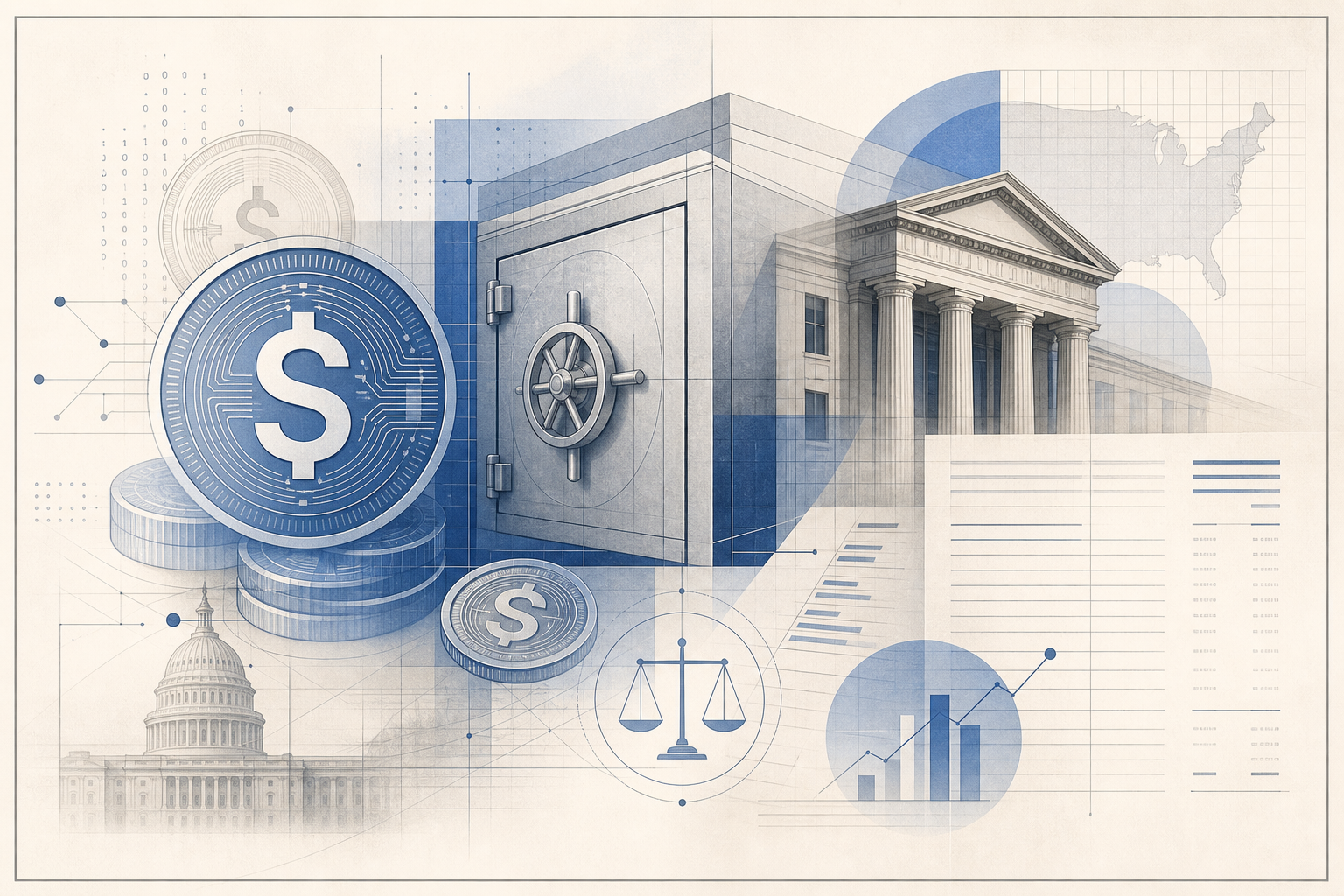
The U.S. stablecoin rulebook is starting to move from headline legislation into the harder work of market design. With the FDIC’s comment window on its proposed GENIUS Act framework now closed, the debate has narrowed around three connected questions: who can capture the economics around payment stablecoins, how reserve deposits should be treated inside the banking system, and whether tokenized deposits will be regulated as a genuine bank product or blurred into the broader stablecoin category. That may sound technical, but the answers will determine which institutions control the next layer of dollar rails.
The FDIC’s proposal is not a narrow licensing exercise. In its release announcing the rulemaking, the agency said the framework would set prudential standards for FDIC-supervised permitted payment stablecoin issuers, including requirements covering reserve assets, redemption, capital and risk management. It would also establish expectations for custodial and safekeeping services tied to payment stablecoins. Just as important, the proposal addresses pass-through insurance questions for deposits held as reserve assets and says tokenized deposits that already satisfy the legal definition of a deposit should not be treated differently simply because distributed ledger technology is used to represent them. That combination makes the proposal a pivot point for issuers, banks and middleware providers alike.
One side of the argument is coming from crypto infrastructure firms that want the final rule to leave room for wallet distribution, self-custody and DeFi connectivity. In its May 18 filing, Consensys argued that the FDIC’s proposed approach to yield could reach beyond the statute by sweeping in independent third parties that are not the issuer itself. The company also asked the agency to make clear that non-custodial software interfaces are not regulated intermediaries simply because users employ them to access independent protocols. More broadly, Consensys urged the FDIC to preserve supervisory discretion around reserve, redemption and capital issues instead of relying on rigid cliff-edge consequences. In practice, that is a push for a regime where the issuer is supervised, but open software distribution and user-controlled stablecoin flows remain possible.
The banking industry’s response is aimed somewhere else. A June 9 letter from the Bank Policy Institute, The Clearing House and the Consumer Bankers Association welcomed the FDIC’s technology-neutral treatment of deposits and focused on the tokenized deposit sections of the proposal. Their core message is that deposit insurance eligibility should depend on the legal nature of the bank obligation, not on whether the record sits in a traditional ledger or on a blockchain-based system. That is an important distinction for banks that want to issue blockchain-native deposit products, manage reserves, provide custody and offer related payment services without having those activities treated as equivalent to nonbank stablecoin issuance. For the banking lobby, the tokenized deposit language is not a side issue; it is part of the fight to keep digital money innovation anchored inside insured institutions.
The reserve deposit question matters just as much. Stablecoin issuers need banking partners to hold the cash and short-duration assets that support redemption, but banks are wary of a structure that migrates low-cost transaction balances out of deposit accounts and into token form without a clear regulatory perimeter. That is why the debate over pass-through insurance, custody fees and servicing economics is so intense. If reserve balances are legally and operationally distinct from ordinary deposits, banks will seek compensation and stricter boundaries. If tokenized deposits receive clearer treatment and remain recognizably bank liabilities, institutions gain a stronger basis for building their own onchain cash products rather than only servicing third-party issuers.
What emerges from the comment process is not a simple fight between crypto and banks. It is a contest between two ways of scaling digital dollars. One model starts with regulated issuers and wallet distribution, then tries to preserve open network access around the edges. The other starts with bank liabilities, tokenized deposits and supervised custody, then extends digital functionality from the banking core outward. The FDIC’s final approach will influence whether stablecoins develop mainly as a parallel payments layer, as a bank-integrated product set, or as a hybrid market where issuers, custodians and depository institutions each control different parts of the stack.
For RWA markets, that decision has consequences well beyond retail payments. Tokenized treasuries, onchain settlement products and institutional cash management tools all depend on credible dollar instruments that can move between wallets, custodians and regulated balance sheets without legal ambiguity. The current comment letters make clear that the market is no longer debating whether stablecoins belong in mainstream finance. It is debating who gets to intermediate them, who earns from them and how closely they remain tied to the traditional deposit base that still underpins U.S. credit creation.