Coinbase and Cardless push stablecoins into consumer credit with USDC-backed card
Coinbase and Cardless have launched a credit card that uses USDC on Coinbase as collateral, pushing stablecoins beyond payments and into consumer credit underwriting. The structure turns tokenized cash into a risk-management tool rather than just a spending rail.
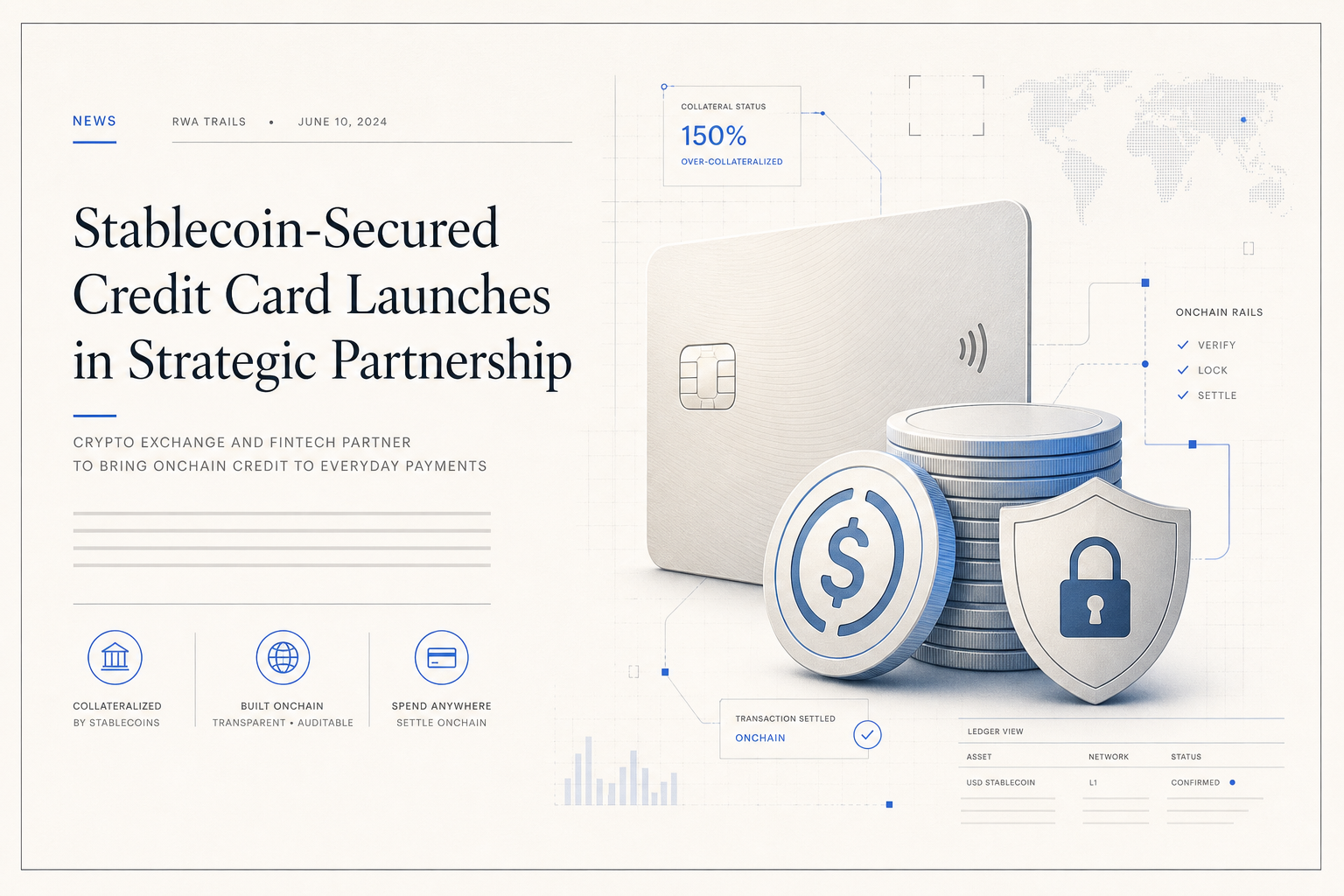
Coinbase and Cardless are extending the stablecoin payments playbook into consumer credit with a card product that uses USDC balances as collateral rather than asking every applicant to qualify on unsecured terms. The structure matters because it shifts stablecoins from a spend-and-settle instrument into a balance-sheet input for underwriting. In practical terms, the product gives Coinbase users a way to lock part of their dollar-backed crypto holdings, access a revolving card, and keep those reserved assets productive while the credit line is open. That is a more consequential RWA development than a typical rewards-card launch because it applies tokenized cash to a core function of retail finance: securing risk for a lender while preserving usability for the customer.
The mechanics disclosed around the launch are straightforward. Cardless said the new card is designed for applicants who cannot be approved for a standard unsecured credit card but who do hold digital assets on Coinbase. A portion of the user’s USDC on the exchange is set aside as collateral against the debt, and Cardless co-founder Michael Spelfogel said cardholders continue to earn yield on those sequestered balances. The companies are also charging a $49.99 fee for access to the product. That combination of overcollateralized support, yield retention and card access creates a structure that looks closer to secured credit than to the earlier generation of crypto debit cards that simply let users spend down balances.
The launch also builds on infrastructure the two companies had already been assembling. Cardless’s customer materials for the Coinbase One Card describe a fully branded card experience built on the American Express network and managed inside the Coinbase app, with Cardless providing the application flow, servicing stack, wallet provisioning and crypto payment tooling. American Express separately announced the Coinbase One Card for its network, reinforcing that this is not an isolated experiment but part of a broader effort to place Coinbase-branded card products inside more conventional payments rails. The new stablecoin-secured version appears to be a logical next step: once the app distribution, card servicing and network relationships are in place, the remaining innovation is the underwriting wrapper around the customer’s on-exchange assets.
That underwriting wrapper is where the RWA angle becomes more interesting. Stablecoins have already become important as settlement assets, treasury management tools and collateral in crypto-native markets. Using USDC reserves to support a consumer credit product brings the same asset class into a regulated-adjacent lending workflow that ordinary card users can understand immediately. The economic proposition is simple: customers who may be thin-file, rebuilding credit, or otherwise difficult to underwrite on an unsecured basis can post highly liquid digital dollars instead. For the issuer and program manager, that lowers loss exposure; for the user, it may unlock access without forcing a full liquidation of crypto holdings.
The product also highlights an increasingly important design pattern for tokenized finance: keeping the underlying asset inside a controlled operating environment while exporting utility into another financial service. In this case, the USDC stays on Coinbase, remains earmarked as collateral, and still produces yield according to the launch details. That means the user is not moving funds into an external structure or directly selling the asset to access liquidity. If this model scales, stablecoin issuers, exchanges and card-fintech partners could start competing not only on rewards and acceptance, but on how efficiently tokenized cash can support secured borrowing, spending limits and account-level risk decisions.
There are still practical constraints to watch. Cardless did not disclose issuance volume from the earlier Coinbase card partnership, and the new card’s adoption will depend on eligibility rules, collateral requirements, economics after the annual fee, and how clearly customers understand the difference between a secured card and ordinary unsecured revolving credit. There is also a policy dimension in the background. As lawmakers and regulators debate how stablecoins should be supervised, products that turn dollar-backed tokens into inputs for mainstream consumer finance will attract more scrutiny than simple wallet transfers or exchange settlement. That does not make the structure unworkable, but it does mean operational controls, disclosures and reserve confidence will matter as much as the payments UX.
Even with those caveats, the Coinbase-Cardless launch is a meaningful signal for the RWA stack. Much of the market still talks about tokenization through the lens of treasuries, funds and private credit. This product shows the same onchain cash primitives moving into everyday credit distribution, where the commercial opportunity is much larger and user behavior is easier to observe. If stablecoins are going to become foundational financial infrastructure, they need to do more than settle trades between crypto venues. They need to help originate, secure and route mainstream financial products. A stablecoin-backed credit card is an early example of that transition from tokenized money as a store of value to tokenized money as consumer-finance collateral.