Cloudflare pushes stablecoin micropayments closer to production infrastructure with its Monetization Gateway
Cloudflare’s new Monetization Gateway moves stablecoins out of crypto-native apps and into web infrastructure. By combining edge enforcement with the x402 payment standard, the company is framing sub-cent, machine-to-machine settlement as a practical way to price APIs, data feeds, and AI-era digital resources.
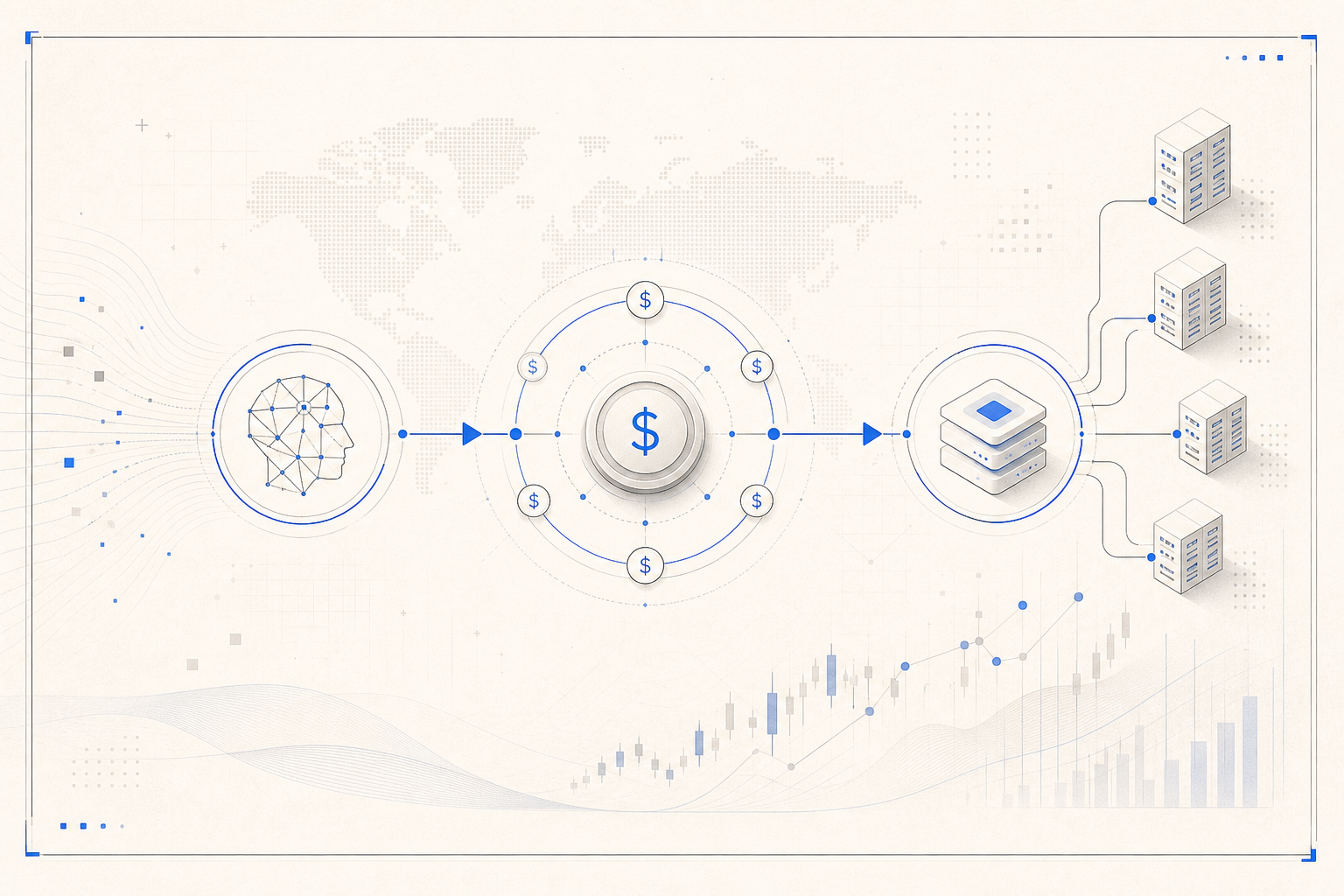
Cloudflare is making a more direct bet that stablecoins can become part of mainstream Internet plumbing rather than remain mostly confined to exchanges, wallets, and crypto trading pairs. The company has opened a waitlist for its Monetization Gateway, a product designed to let customers charge for web pages, datasets, APIs, and model-context-protocol tools sitting behind Cloudflare’s network. The immediate RWA-adjacent significance is not that Cloudflare is issuing a new tokenized asset, but that it is trying to normalize stablecoin settlement as embedded payment infrastructure for digital services. If that model works at scale, it gives stablecoins another foothold in real-world commercial workflows where usage is metered, priced, and settled in small increments.
Cloudflare’s own product materials frame the release as the next step after its earlier Pay per Crawl initiative, which focused on helping publishers charge AI crawlers for access to content. The new gateway broadens that idea from content monetization to almost any Internet resource routed through Cloudflare’s edge. In the company’s description, customers will be able to define payment rules for specific routes, resources, or request types while Cloudflare handles verification and enforcement closer to the network edge. That matters because it reduces the need for every API operator or data provider to build a separate billing stack just to support usage-based, machine-driven commerce.
The payment rail underneath the launch is x402, an open HTTP-based payment standard that revives the long-unused 402 Payment Required status code. In the flow Cloudflare describes, a client requests a protected resource, receives pricing and payment instructions if payment is required, completes the payment, and then retries the request with proof attached. Cloudflare says the gateway is being built so that settlement can happen in stablecoins with low overhead, while the x402 project itself describes the standard as network- and asset-agnostic even though stablecoins are a natural early fit. The practical design goal is straightforward: make paying for a machine-readable resource feel like part of the request-response cycle instead of a separate checkout process.
That architecture is particularly relevant now because AI agents and crawlers are starting to behave like economic users of the web. Cloudflare argues that agentic traffic does not map well to either the advertising model or the standard SaaS subscription model, since software agents may need to buy a single answer, one API call, a block of compute, or access to a narrow dataset without setting up a long-term commercial relationship. Cloudflare also says AI crawlers can request content far more frequently than they send visitors back to a site, which is one reason it began by giving publishers tools to block, allow, or charge those requests. The Monetization Gateway extends that same logic to APIs and data products, where request-level pricing is already common in theory but still operationally heavy in practice.
Stablecoins are central to the pitch because the product is aimed at transactions that conventional payment rails handle badly. Cloudflare’s launch materials explicitly focus on tiny payments, fast settlement, and the absence of chargebacks, all of which matter when the buyer may be a piece of software making many low-value purchases. The company specifically cites stablecoins such as USDC as examples of assets that can move across the Internet quickly enough, and cheaply enough, to support sub-cent or near-sub-cent pricing. For RWA markets, that is a meaningful directional signal: one of the larger infrastructure companies on the web is treating dollar-backed tokens not as speculative instruments but as functional payment rails for software-native commerce.
There is also an operational angle that goes beyond the payments headline. Cloudflare says the gateway will run across its network in more than 330 cities, with payment verification happening close to the buyer and before traffic reaches the customer’s origin. In effect, that pushes both metering and enforcement outward into the delivery layer. For businesses selling financial data, tokenized-asset analytics, credit information, compliance tooling, or regulated market access, that kind of edge-based payment enforcement could become useful even if the first wave of demand comes from AI tooling. The model is attractive because it lets the seller keep control over pricing and access policy while outsourcing part of the transaction handling burden.
The ecosystem around x402 is also being built to look broader than a single-vendor experiment. Cloudflare says it is working with more than 25 organizations through the x402 Foundation, and the public x402 codebase now sits under that foundation’s umbrella rather than under a single corporate repository. That does not guarantee adoption, but it does matter for enterprises evaluating whether this is a proprietary payment gateway or the start of a more portable standard. Open standards are particularly important in RWA infrastructure because market participants usually want payment, identity, and compliance layers that can interoperate across service providers instead of locking critical workflows into one edge platform.
The harder question is whether buyers and sellers will actually change behavior. Stablecoin settlement for APIs still needs reliable wallet handling, treasury policies, accounting treatment, and governance around accepted assets. Many businesses will also want clearer controls over identity, dispute handling, and sanctions screening before they expose paid resources to autonomous software. Even so, Cloudflare’s move is notable because it takes stablecoin utility out of a crypto-only conversation and places it inside ordinary web operations. That is exactly how real adoption often starts: not with a headline-grabbing token launch, but with a boring infrastructure decision that makes a previously awkward commercial workflow cheaper, faster, and easier to automate.