Bybit tests tokenized IPO access as exchanges push deeper into primary-market rails
Bybit’s new IPO Express product extends tokenization from secondary-market trading into IPO allocation workflows, using crypto-funded subscriptions and xStocks infrastructure to package equity access on exchange-native rails. The launch is notable because it tests whether tokenized equities can move beyond synthetic exposure toward custody-backed primary-market distribution.
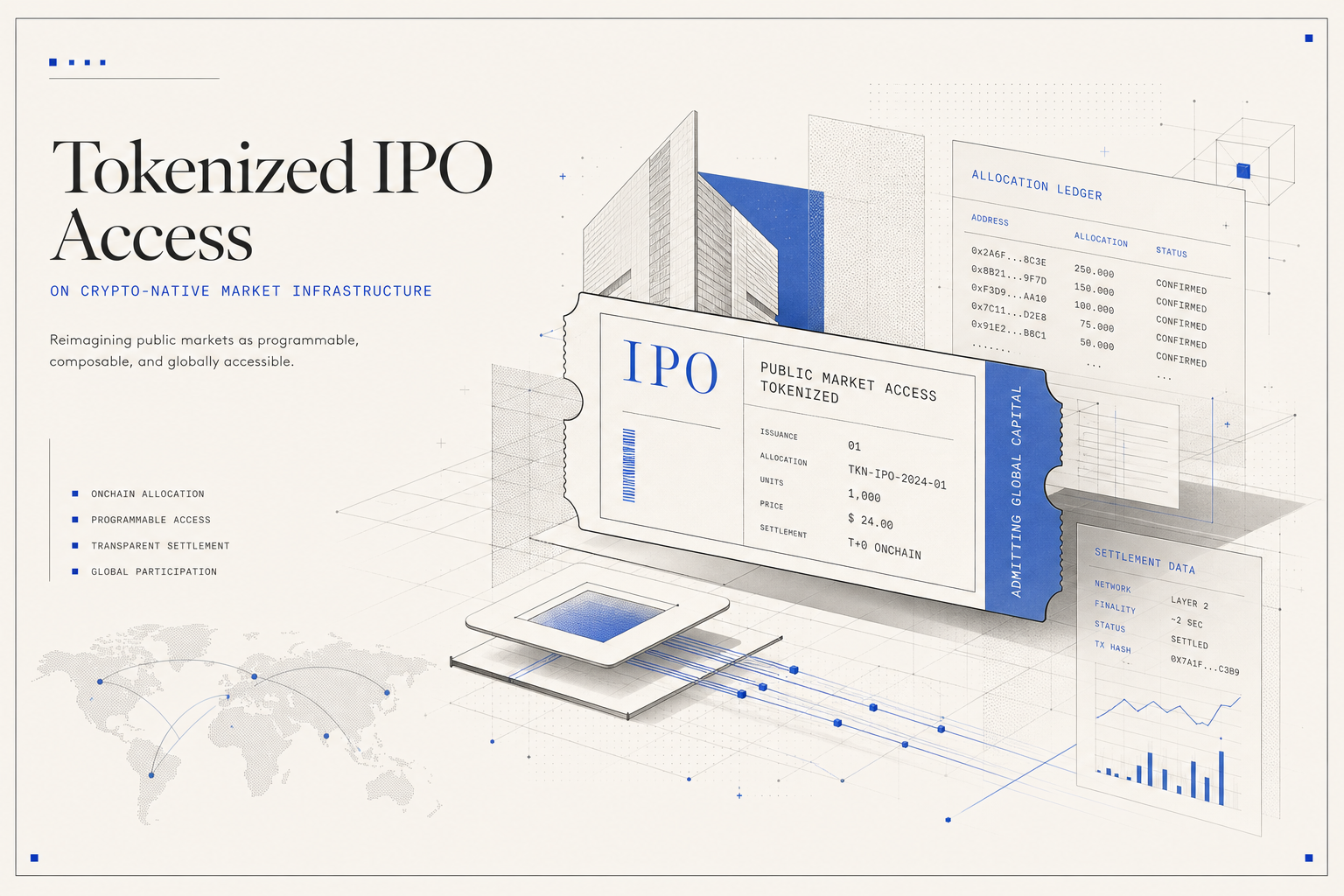
Bybit has opened a new front in the tokenization race with the launch of IPO Express, a subscription-style product designed to let eligible users participate in equity offerings through digital assets instead of a traditional brokerage account. The move matters for the RWA market because it pushes tokenized equities beyond secondary-market trading and into the higher-friction primary issuance workflow, where access, allocation and settlement have historically been controlled by brokers, banks and regional distribution networks.
Bybit’s own June 7 product announcement describes IPO Express as a platform that lets users register for an offering, commit supported crypto assets such as USDC during a subscription window, and receive allocations after the book is finalized. Any unallocated funds are refunded automatically, while allocated assets are credited to user accounts and can begin trading on Bybit Spot once listing starts. In practical terms, that means Bybit is trying to package IPO access into the same account structure crypto users already use for spot and derivatives trading, rather than forcing them through a separate brokerage onboarding flow.
The broader infrastructure underneath that product appears to come from Payward Services’ xStocks framework, which announced earlier this month that customers of Kraken and selected alliance partners would soon be able to express interest in U.S.-listed IPOs and receive tokenized equity allocations at the offering price on listing day. In that framework, demand is aggregated before the listing, allocations are finalized with underwriting participation, and the resulting tokens are backed one-for-one by the underlying shares held in custody by a regulated entity. That structure is important because it moves the story away from loosely collateralized pre-IPO derivatives and toward a model that claims direct backing, defined custody and distribution through regulated channels.
That distinction helps explain why this launch deserves more attention than earlier crypto exchange experiments around private-market hype. Several venues have already offered pre-IPO exposure in derivative or prediction-market formats, but those products often gave users synthetic price exposure rather than an actual tokenized allocation linked to issued shares. Bybit IPO Express, at least as described in the company’s public materials and the xStocks documentation, is aimed at the issuance-and-allocation layer itself. If that process works as advertised, it would represent a more substantive step for tokenized equities than simply listing another synthetic market tied to an anticipated debut.
Reports tied the first Bybit registration window to a SpaceX-linked offering, which is why the rollout immediately drew attention across crypto and equity circles. But the more durable story is not any single issuer; it is the attempt to standardize tokenized IPO access as a reusable distribution rail. xStocks says its framework is built to let partner exchanges open indication-of-interest windows ahead of listings, aggregate retail demand globally and then distribute tokenized shares once pricing is complete. Bybit’s announcement mirrors that sequencing with registration, subscription, allocation and spot trading phases, suggesting the exchange is aligning its user experience with a broader tokenized-capital-markets stack rather than launching a one-off campaign.
There are still meaningful constraints and risks. Both Bybit and xStocks emphasize jurisdictional eligibility, identity verification and other compliance gates. xStocks states that the product is not available in the United States or to U.S. persons and that the tokens are issued by Backed Assets and offered through regulated Payward entities, while Bybit notes that offerings can be delayed, modified, suspended or canceled and that post-listing price volatility can be significant. Those caveats are not minor footnotes. They underline that tokenized equity distribution is still being built around fragmented regulatory perimeters, with access defined as much by licensing and geography as by technology.
Even with those limitations, IPO Express is a noteworthy signal for the next phase of the RWA market. Tokenized treasuries and money-market products have dominated recent adoption because they solve immediate balance-sheet and settlement problems for institutions. Tokenized equities have been more commercially visible but structurally less proven. Bybit’s entry suggests exchanges now see primary-market access itself as a product category that can be rebuilt on crypto-native rails, especially when paired with custody-backed token wrappers and programmable settlement. If that model gains traction, tokenization will start looking less like a secondary-market overlay and more like an alternative distribution channel for public-market issuance.