Breez pushes Bitcoin wallets into multi-chain stablecoin payouts without adding separate dollar balances
Breez has launched a send flow that lets apps route payments from a Bitcoin balance into USDC or USDT on more than 30 destination chains. The release matters because it turns Lightning from a Bitcoin-only checkout rail into an interoperability layer for dollar-denominated payouts.
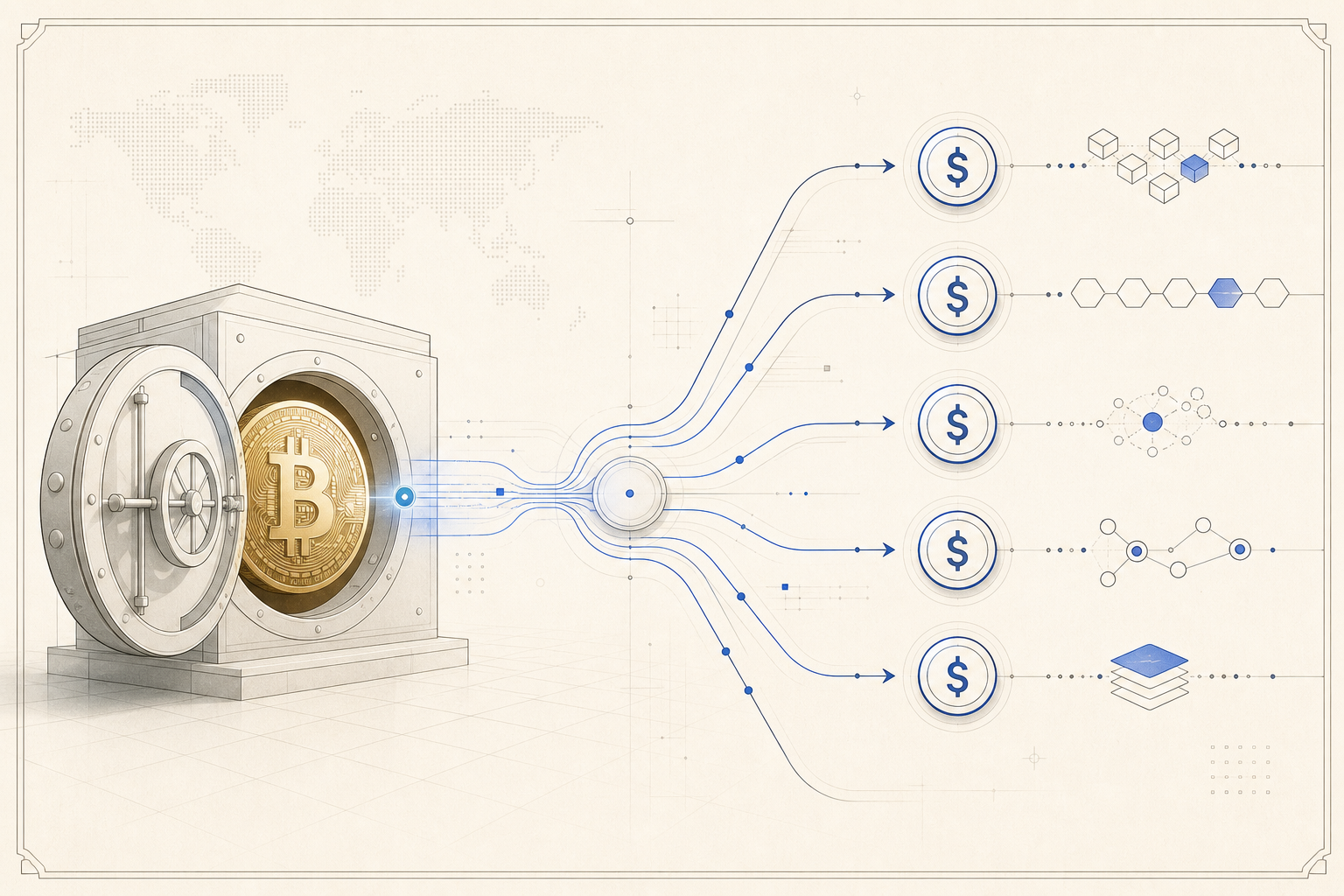
Stablecoin payments have grown faster than most Bitcoin wallet products, especially in corridors where users want dollar exposure at the moment of settlement rather than a volatile crypto balance in hand. Breez is trying to close that gap without asking wallets to become full multi-chain apps. The company has launched a new capability in its developer SDK that lets users send funds from a Bitcoin balance while the recipient receives USDC or USDT on one of more than 30 supported blockchain networks. That means the sender can stay in Bitcoin until the moment of payment, while the receiver can remain on the stablecoin rail they already use.
The mechanics matter here. According to Breez, a wallet or app using the SDK can detect the recipient address, identify the target chain, quote the expected amount and fees before confirmation, and then route the conversion through external liquidity providers. Breez named Flashnet and Boltz as the launch providers handling those conversions. In practice, the product is not introducing a stablecoin on Lightning itself. Instead, it uses Lightning as the transport layer that lets a Bitcoin-funded payment reach a stablecoin destination on another network, which is a more pragmatic design choice than trying to recreate every dollar asset natively inside the Bitcoin stack.
Breez's own product materials show why that distinction is important. In the company's announcement, it framed the feature around a simple developer problem: apps that let people hold Bitcoin often still need to pay freelancers, suppliers or relatives who think in dollars and receive funds on chains such as Base, Ethereum, Solana or Tron. Historically that meant supporting separate balances, separate blockchain integrations and separate operational logic for Bitcoin and stablecoins. Breez is now arguing that the app layer can abstract that complexity away, so the user experience becomes balance-in, dollar-out rather than wallet-by-wallet chain management. That is a meaningful shift for any team trying to build cross-border payment products without maintaining a fragmented settlement stack.
There is also a broader infrastructure angle. Breez's SDK documentation has long positioned the platform as a way for developers to integrate self-custodial Lightning payments without building the full routing and channel-management stack themselves. The documentation and repository materials also make clear that Breez has been evolving beyond a strictly Bitcoin-only product surface, with newer implementations designed for broader asset and payments support. This stablecoin payout release is therefore less an isolated feature than a visible expression of a larger wallet abstraction strategy: keep the end user on a simple balance experience, push the complexity into routing, liquidity and quoting, and let the underlying rails decide how value arrives.
For stablecoins specifically, the release highlights where the next competitive layer is forming. A large part of stablecoin adoption has already moved away from speculative trading and into practical dollar movement across fragmented banking systems. What many apps still lack is a clean way to originate payments from one asset while settling in another, especially when the destination network depends on the recipient rather than the sender. Breez is effectively betting that Bitcoin wallets do not need to win the stablecoin balance war to participate in stablecoin commerce. If they can originate the payment, display the costs clearly and keep the conversion non-custodial from the user's perspective, they can still become part of the dollar-transfer workflow.
That has implications beyond consumer remittances. Merchant apps, neobanks, payroll tools and treasury products increasingly want to offer Bitcoin exposure without forcing every counterparty into Bitcoin acceptance. A system that lets a business treasury hold or receive Bitcoin but pay contractors in USDC on Ethereum or USDT on Tron is structurally different from a wallet that only supports Lightning-native transfers. It broadens the addressable use case from closed Bitcoin loops to mixed-rail commerce, where the value proposition is not ideological purity but reduced integration overhead and faster payout reach. The fact that Breez is exposing this through an SDK rather than a single branded app also matters, because it pushes the feature into other products that may never present themselves to users as crypto wallets at all.
The open questions are mostly operational, not conceptual. Liquidity quality, quote reliability, destination-chain coverage, compliance boundaries and fee transparency will determine whether this feels like institutional-grade payment infrastructure or just a clever routing demo. Breez says the architecture is open to additional providers over time, which suggests the company understands that routing depth and competitive pricing will decide how durable the model becomes. Even with those caveats, the launch is a notable signal for RWA and stablecoin markets: Bitcoin-native infrastructure providers are no longer treating dollar tokens as a parallel ecosystem to ignore. They are starting to treat stablecoins as the settlement format users expect, and Lightning as one of the rails that can help get them there.