Brazil tests tokenized livestock collateral on B3 as dairy herds back new farm credit
A first credit transaction registered through Brazil’s B3 exchange used tokenized dairy cows as collateral, turning monitored livestock into financeable digital assets. The structure points to a new RWA path for agricultural credit: verifiable, movable collateral that can be financed without relying on traditional property pledges.
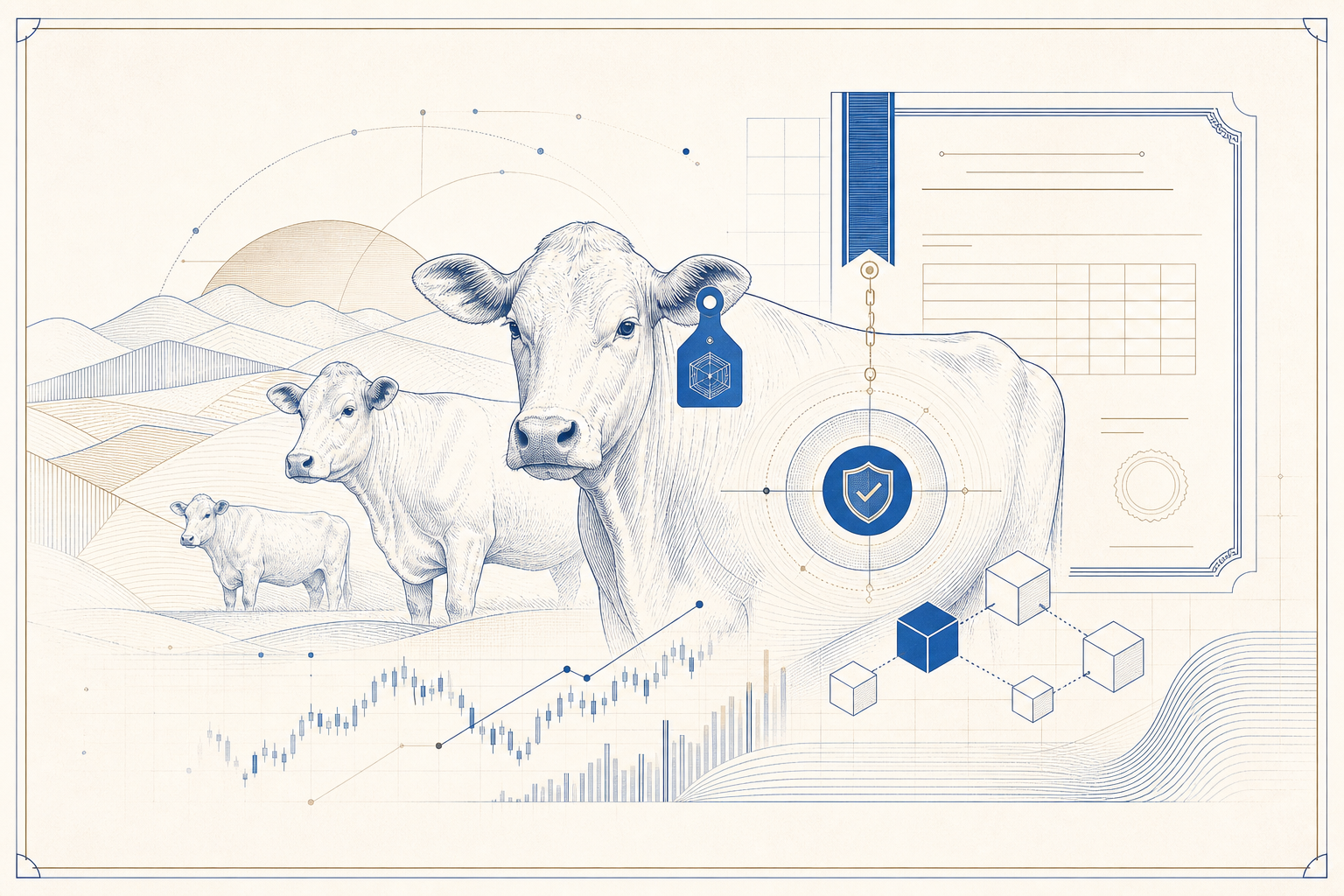
Brazil’s capital-markets infrastructure has logged an unusual new real-world asset experiment: dairy cows used as tokenized collateral in a formal credit transaction registered at B3. The structure connects herd-monitoring data, digital asset registration and private credit underwriting into a single farm-finance workflow. For RWA markets, the significance is not the novelty of putting animals onchain by itself. It is the attempt to turn a hard-to-finance, operationally messy asset into collateral that lenders can monitor, value and reuse with greater confidence.
Local reporting indicates the transaction was structured by Target FIDC and moved R$100,000 in credit using tokenized dairy cattle as guarantee. Separate coverage of the pilot described a pool of 10 cows supporting roughly $20,000 of financing, which is broadly consistent with the local-currency figure at current exchange rates. In both accounts, the animals were linked to digital records and formally registered through B3, giving the financing structure a recognized market-infrastructure layer rather than leaving the exercise as a closed software demo. That is an important distinction: the project is testing whether tokenization can plug directly into existing credit processes instead of sitting outside them.
The operating model depends on Cowmed, a Brazilian agtech company focused on intelligent herd monitoring. Cowmed describes its platform as a continuous bovine-monitoring system built for Brazilian producers. In the reported financing workflow, collars attached to the animals capture data on health, behavior and location in real time. Those data points are used to create a unique digital identity for each cow, which can then be attached to loan documentation and the collateral record. In practical terms, the technology is meant to answer a simple lender question: is the pledged asset real, identifiable and still where the borrower says it is?
That matters because livestock has historically been difficult collateral for formal lenders. Herds move, conditions change and on-site verification is expensive, which often leads banks and credit funds to apply steep discounts to collateral value. One executive involved in the structure said a cow valued at around R$20,000 might previously have been treated as collateral worth only R$8,000 because of uncertainty around inspection and control. Continuous monitoring changes that risk model. It does not remove biological risk, operational risk or borrower risk, but it can narrow the information gap that forces lenders to take conservative haircuts. If that haircut compresses, more working-capital credit can be extended against the same productive asset base.
The structure also addresses another issue that matters in both traditional asset-backed lending and tokenized markets: duplicate pledging. When collateral records are weak, the same asset can be promised into more than one financing line, creating disputes only after a borrower defaults. The reported model assigns each animal an exclusive code registered with the transaction, making it harder to reuse the same collateral elsewhere without detection. The financing design also includes a replacement mechanism if an animal dies and keeps additional animals in the structure as a buffer so the collateral pool can remain intact through the life of the loan. Those details are operational, but they are exactly the details that determine whether an RWA structure survives outside a press release.
The bigger implication is that tokenization here is being used less as a distribution story and more as a collateral-management upgrade. Much of the RWA market has centered on funds, Treasuries and cash-like instruments because they are administratively clean and institutionally legible. Agricultural collateral sits at the other end of the spectrum: fragmented, physical and expensive to verify. If tokenized records plus sensor data can make that kind of asset financeable on better terms, the addressable market for RWA infrastructure broadens well beyond money-market products. Estimates associated with the project suggest the model could eventually support hundreds of millions of reais in credit if adoption expands across a meaningful share of monitored producers.
That does not mean the format is ready for broad institutional scale. Lenders will still need confidence in data integrity, legal enforceability, servicing standards, repossession or substitution procedures, and the precise rights attached to a digital collateral record under Brazilian law. They will also need to separate marketing claims from proven portfolio performance over time. But as a live test, the B3-registered cattle transaction is notable because it pushes tokenization into an area where better asset visibility can translate directly into cheaper or more available credit. That is one of the clearest real-economy use cases for RWAs: not just putting an asset into digital form, but improving how that asset is financed.