Brazil’s tokenized cattle loan shows how RWA credit can reach collateral far outside traditional capital markets
A cattle-backed credit deal registered through Brazil’s market infrastructure is testing whether tokenization can turn hard-to-monitor farm assets into financeable collateral. The structure matters because it points to a broader RWA playbook: digitize identity, monitor the asset continuously, and make underwriting operationally simpler.
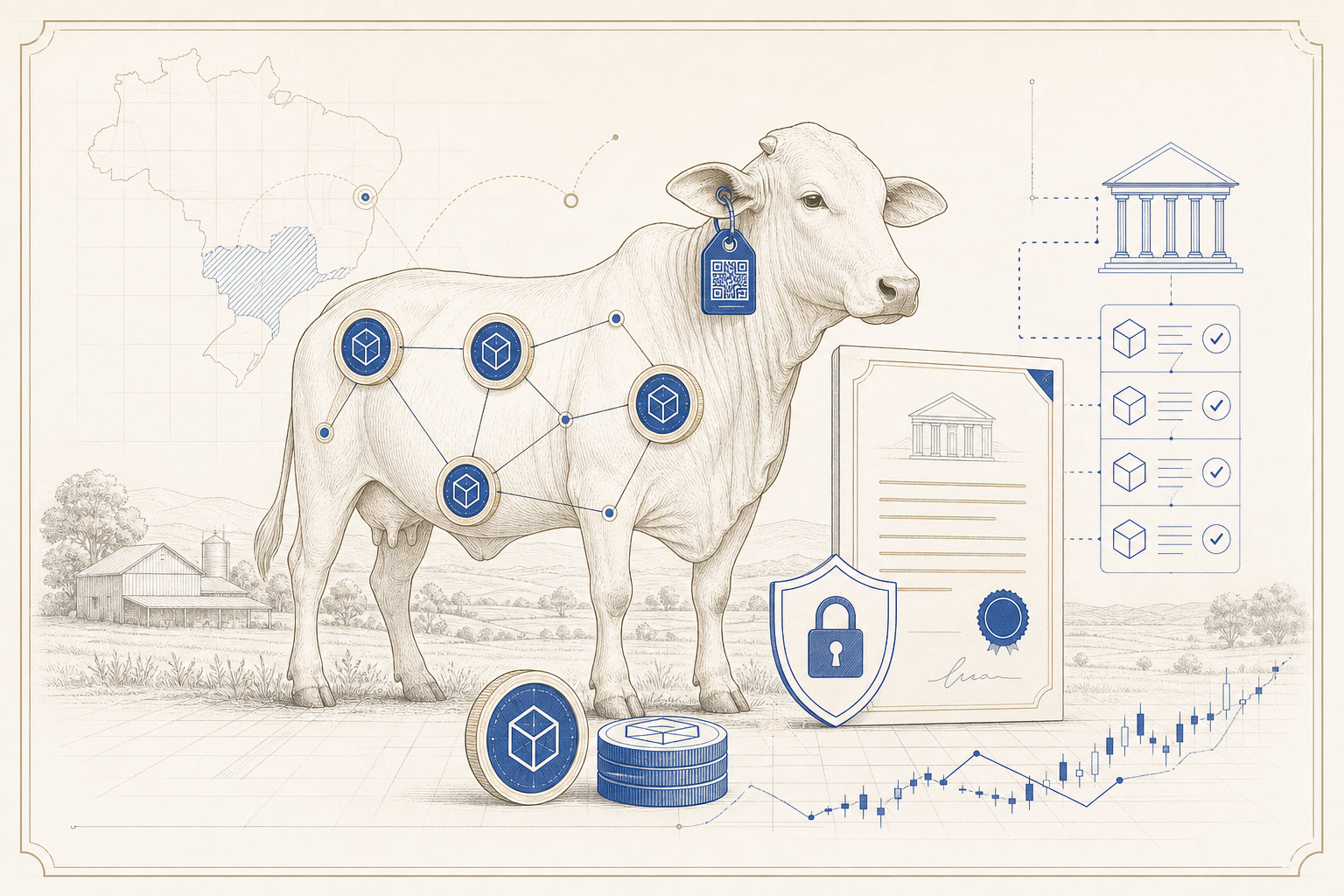
Brazil’s latest experiment in real-world asset finance is not another tokenized Treasury product or fund wrapper. It is a livestock-backed credit transaction built around ten dairy cows, and the reason it matters is less the size of the first deal than the operating model behind it. A 100,000-Brazilian-real loan was registered through B3 using digitally identified cattle as collateral, creating a structure in which an agricultural asset that is normally difficult to inspect, value and monitor can be packaged for formal credit infrastructure. For RWA markets, that is the more durable signal: tokenization is moving beyond financial assets that already trade cleanly and into collateral classes where data, identity and servicing are the real bottlenecks.
The mechanics are what make the transaction notable. The cattle were linked to unique digital identities and monitored through connected collars supplied by Cowmed, an agricultural technology company whose product stack is built around continuous herd monitoring. That data layer is central to the financing logic. Instead of relying on infrequent physical inspections or static paperwork, the structure uses live operational information on the animals’ condition and location to support the collateral package over the life of the loan. In practical terms, that means the token is not simply a marketing label attached to a cow. It is the digital wrapper around a monitored real-world asset, with the monitoring system doing much of the work that would otherwise sit in manual verification and risk controls.
The transaction was structured by Target FIDC, and local reporting described the pledged cattle as being worth roughly 120,000 reais, leaving an overcollateralized buffer relative to the 100,000-real financing amount. That sizing matters because early-stage RWA credit structures usually fail or succeed on collateral management discipline, not on the novelty of the underlying asset. If lenders can see where the asset is, how it is performing and whether substitutions can be made when needed, they can narrow the haircut traditionally applied to agricultural collateral. Local reporting also said the structure includes additional animals to preserve the collateral package if one animal is lost, which is exactly the kind of servicing detail institutional credit products need before they can scale.
There is also a market-structure angle here that deserves attention. Registering the transaction through B3 pushes the experiment closer to formal capital-markets plumbing than many tokenization pilots that remain confined to closed consortium environments. B3’s involvement does not by itself guarantee that this becomes a repeatable asset class, but it does suggest a route for bringing nontraditional collateral into recognized financial workflows rather than leaving it in standalone farm-finance software. That distinction matters for tokenization because the most useful RWA products are rarely the ones with the flashiest token story; they are the ones that fit existing underwriting, registry and enforcement processes well enough for lenders and investors to trust them.
Cowmed’s own materials reinforce why this use case is emerging from livestock operations rather than from a more conventional receivables book. The company markets always-on herd monitoring, health alerts, reproductive tracking and nutritional oversight, all of which help create a more granular operating picture of the animals behind a loan. Local reporting said Cowmed is already monitoring around 100,000 dairy cows across roughly 1,000 farms, giving the company a base of real-world data large enough to support more standardized collateral scoring over time. That does not remove biological risk, execution risk or counterparty risk, but it does give the transaction a clearer information architecture than cattle finance has historically had.
For the broader RWA sector, the implication is straightforward: tokenization is increasingly a data and servicing business, not just a distribution business. Treasury funds and money-market products scaled quickly because the underlying collateral was already legible to regulated finance. Agricultural assets are the opposite. They require embedded monitoring, replacement rules, collateral waterfalls and clear legal registration before outside capital can treat them as dependable security. If this Brazilian model holds up operationally, it could become a template for other under-digitized collateral pools in commodities, equipment finance and rural credit, where the financing opportunity is real but the cost of verifying asset quality has historically kept balance sheets cautious.
That is why this deal deserves more attention than its headline size suggests. On paper, a cattle-backed loan is small and highly local. In design terms, it is a serious RWA test case for whether tokenization can convert an opaque operating asset into financeable collateral without stripping out the controls lenders need. If the structure proves durable through servicing, substitutions and repayment, the next step will not simply be larger cattle pools. It will be a broader question for tokenization markets: how many real assets that were previously too operationally messy for efficient credit can become investable once identity, monitoring and registry functions are turned into software-first infrastructure?