Brazil’s tokenized cattle deal tests whether better farm data can widen credit access
A B3-registered dairy-cattle financing in Brazil shows how tokenization can move beyond funds and treasuries into live productive assets. By turning monitored livestock into digitally registered collateral, the structure aims to reduce lender uncertainty and make rural credit more usable at the farm level.
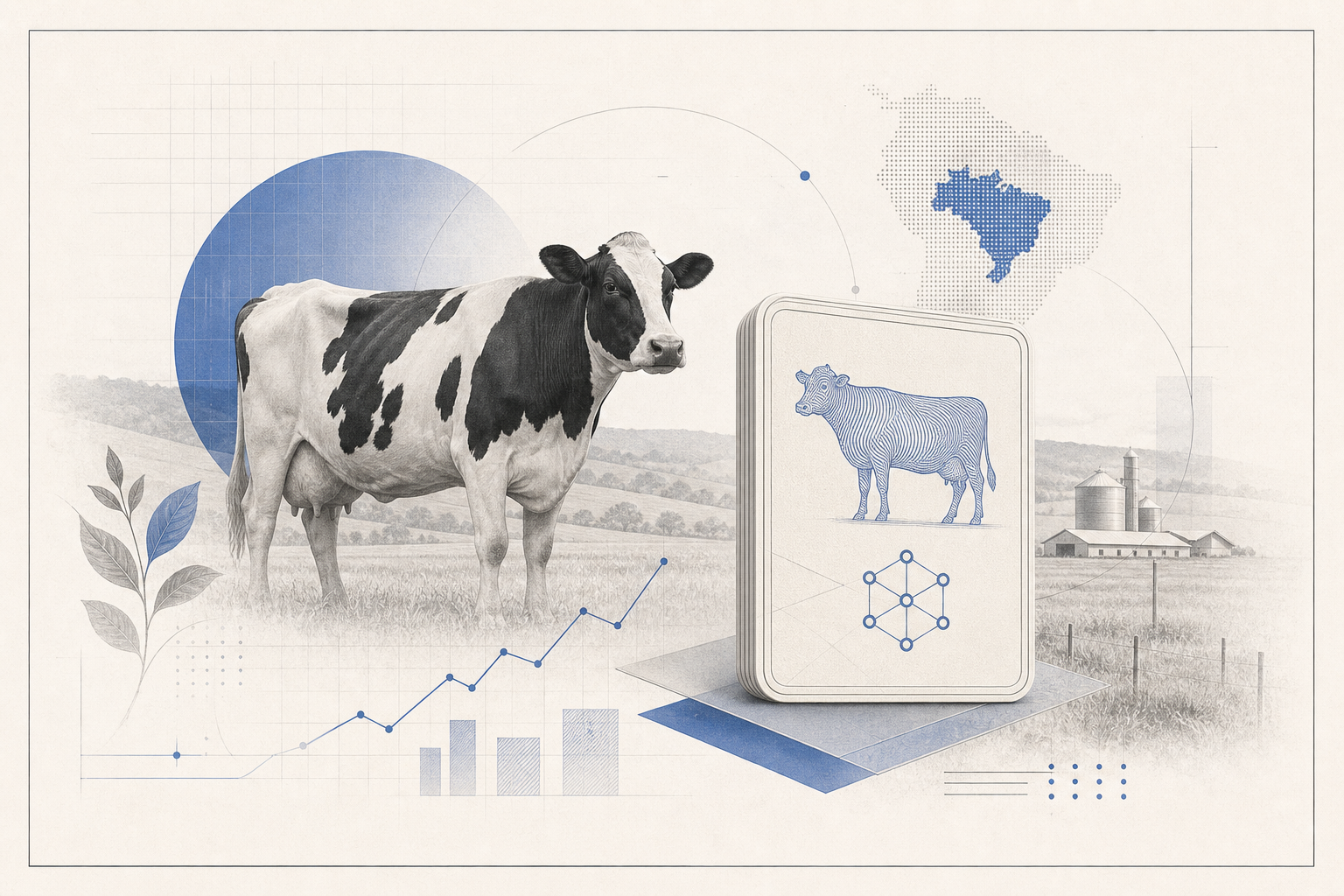
Brazil’s capital markets just logged a novel kind of collateral. In a transaction registered on B3, the country’s main exchange operator, a dairy farm in Paraná used tokenized cows to support a rural credit operation, turning livestock data into something lenders could underwrite more like a monitored financial asset than an opaque herd on a distant property. For RWA builders, the significance is not the headline novelty of ‘cows onchain.’ It is that a productive real-world asset with biological and operational risk was packaged into a structure that traditional finance infrastructure was willing to recognize.
The transaction centered on Fazenda Engenho Velho in Imbituva, where ten dairy cows valued at about R$120,000 were used to back a R$100,000 CPR-F, a Brazilian rural credit certificate designed to finance agricultural production. BMP, a central-bank-authorized credit institution, provided the financing, while Target FIDC acquired the credit rights and registered the operation on B3. That chain matters because it shows the deal was not limited to an internal pilot inside an agtech platform. It crossed from farm operations into a recognizable credit-and-capital-markets workflow with formal registration and transferability.
What made the structure workable was the data layer around the animals. Cowmed, a Brazilian agtech company, fitted the cattle with smart collars that track health, behavior and location in real time. Those data points are converted into a unique encrypted digital identifier for each animal and attached to the credit documentation, creating a persistent record that lenders can monitor without relying solely on periodic field inspections. CNN Brasil’s coverage of the transaction described that digital identity as the mechanism that allowed the herd to be registered on B3 as collateral, while Cowmed’s own public materials emphasize continuous herd monitoring as the company’s core operating model.
That addresses a longstanding problem in agricultural lending: livestock is valuable, but it is hard to verify continuously and easy for lenders to discount aggressively. According to comments published by both Decrypt and CNN Brasil, market practice can value a cow at a steep haircut because banks often lack reliable information on whether an animal remains healthy, located where expected and free from double-pledging risk. In the new structure, each animal’s registry entry is meant to reduce that uncertainty. Target FIDC also said the framework can handle normal biological attrition by allowing digital substitution of animals and by building in additional collateral coverage, making the model more practical for real credit underwriting rather than a one-off showcase.
The broader RWA implication is that tokenization is moving beyond the asset classes that have dominated the market so far. Most onchain RWA growth has been concentrated in tokenized Treasury funds, cash-management products and institutional credit wrappers, where the underlying assets already fit neatly into securities plumbing. This Brazilian deal points to a harder frontier: productive assets in the real economy that generate cash flow but come with messy monitoring, legal and operational constraints. In that sense, the innovation is less about issuing a token and more about turning live operational data into collateral quality that a lender, a fund vehicle and an exchange-linked registry can all accept.
Cowmed’s scale helps explain why the idea is credible enough to test. On its website, the company says it is connected to more than 1,400 farms and has monitored more than 900,000 animals, with billions of monitoring hours logged. CNN Brasil separately reported that the company currently tracks about 100,000 dairy cows and sees roughly R$2 billion in herd value across the network relevant to this financing model, with management targeting hundreds of millions of reais in future credit operations if adoption expands. Those figures do not prove the structure will become mainstream, but they do suggest the pilot sits on top of an operating data business rather than a purely promotional tokenization narrative.
The next question is whether this can scale beyond a small first deal. For that to happen, lenders will need confidence in enforceability, valuation standards, replacement procedures and ongoing data integrity, while farmers will need to see a real reduction in borrowing costs or an increase in available credit. Still, the direction is notable. If tokenization is supposed to improve market access for real assets, one credible path is not simply putting existing securities on new rails, but making previously discounted collateral legible enough for formal finance to use. Brazil’s tokenized cattle deal is an early example of that thesis moving from conference rhetoric into a live credit product.