Bitwise sees advisor attention moving from bitcoin toward stablecoins and tokenized markets
Bitwise says financial advisors remain engaged with crypto, but the center of gravity is shifting toward stablecoins and tokenization rather than pure bitcoin exposure. That matters because advisor curiosity often precedes product due diligence, model-portfolio changes and institutional distribution at scale.
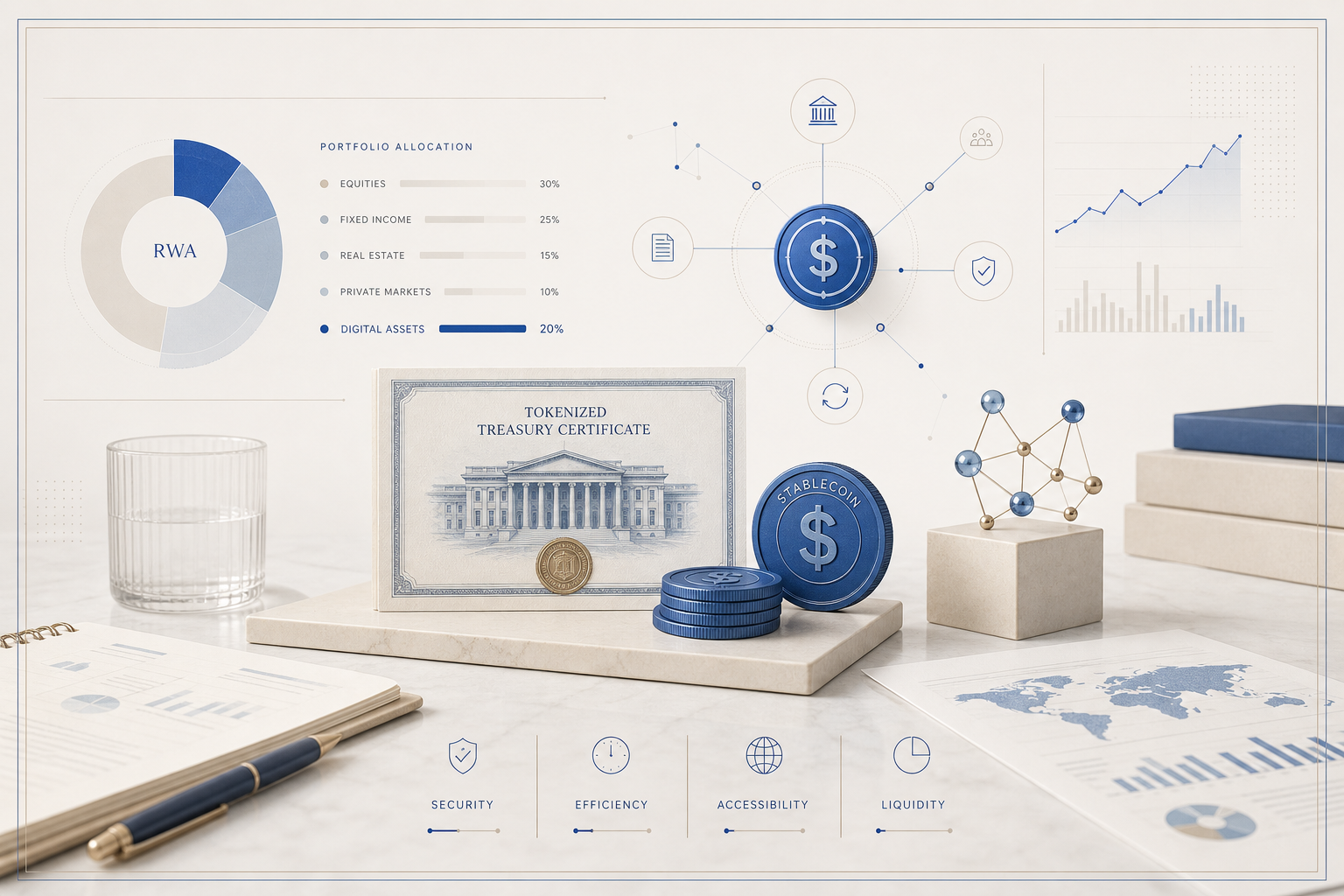
A new signal from Bitwise suggests the next leg of institutional crypto demand may be built less on directional bitcoin conviction and more on real-world financial use cases. In a June 10 CIO memo, Bitwise Chief Investment Officer Matt Hougan said he spent one day in conversations with more than 40 financial advisors and came away with two conclusions: advisors are still interested in crypto, and they are more interested right now in stablecoins and tokenization than in bitcoin. That is not the same as a wave of immediate allocations, but it is a notable read-through on where professional gatekeepers are focusing their research effort during a weaker tape.
The distinction matters because advisors typically sit between new product narratives and client capital. In previous cycles, crypto recoveries have been driven by a mix of fresh infrastructure and new buyer cohorts. Hougan’s memo frames 2026 through that lens, arguing that stablecoins, tokenization, perpetual futures and other application-layer products are becoming the most plausible route to a broader market reset. His point is not that bitcoin has lost strategic relevance. Rather, the conversations he described suggest that advisors currently find payments, capital-markets plumbing and onchain financial products easier to underwrite than another round of purely macro bitcoin enthusiasm.
Bitwise’s own survey work supports that interpretation. In the firm’s January 2026 benchmark survey with VettaFi, 32% of advisors said they invested in crypto for client accounts during 2025, up from 22% in 2024. The same survey said 42% of advisors were able to buy crypto in client accounts, versus 35% a year earlier and 19% in 2023. Just as important for RWA markets, Bitwise said stablecoins and tokenization were the areas that attracted the most advisor interest, at 30%, ahead of digital-gold and crypto-AI themes. That does not tell us where flows will land asset by asset, but it does show which narratives are moving through wealth-management channels with the least resistance.
Bitwise has also been building that case publicly outside the memo. In a March webinar focused on stablecoins and tokenization, the firm argued that blockchain-based dollars can outperform legacy payment rails on speed and programmability, while tokenization represents the next step in moving financial assets onto interoperable digital infrastructure. Taken together, the survey, memo and product education campaign point to a consistent institutional pitch: crypto’s most durable adoption path may come from making familiar financial products cheaper to move, easier to settle and simpler to distribute. That is a message wealth advisors can often translate more readily than speculative-token narratives.
There is still an important caveat. Advisor interest is an early signal, not a booking confirmation. Compliance teams, platform approvals, suitability reviews and client risk budgets all stand between curiosity and deployment. In addition, many advisors who want exposure to stablecoins or tokenization may express that view through adjacent vehicles such as listed crypto equities, tokenization platforms or yield-bearing treasury products rather than by buying raw digital assets directly. So while the Bitwise readout is constructive, it should be interpreted as a leading indicator of institutional product demand, not as proof that advisor capital has already rotated in size.
Even with that caveat, the shift is relevant for the RWA stack because it favors businesses tied to settlement and asset issuance instead of only market beta. If advisors spend more time diligencing tokenized cash, tokenized treasuries and blockchain-based transfer rails, demand can broaden toward the infrastructure that supports onchain finance: dollar tokens, money-market wrappers, tokenized fund shares and the broker and custody layers around them. That is especially important in a market where investors are looking for revenue models linked to payments, subscriptions, distribution and net new assets rather than only to trading activity.
The larger takeaway is that tokenization is moving from a specialist talking point to a distribution conversation. When advisors responsible for household and institutional balance sheets start asking more questions about stablecoins and tokenized products than about bitcoin itself, the center of market attention shifts from store-of-value narratives to financial utility. For RWA issuers, that is a meaningful change. It implies the next competition may not be over who can launch the loudest crypto product, but over who can package regulated onchain cash and asset exposure in a format advisors are actually comfortable recommending.