BIS research reframes stablecoins as a parallel dollar channel beyond traditional capital controls
New BIS research argues that dollar-backed stablecoins are creating a separate path to U.S. dollar liquidity that does not respond to capital controls the way foreign-currency bank deposits do. The finding sharpens the policy debate over stablecoins in emerging markets from payments innovation to monetary sovereignty.
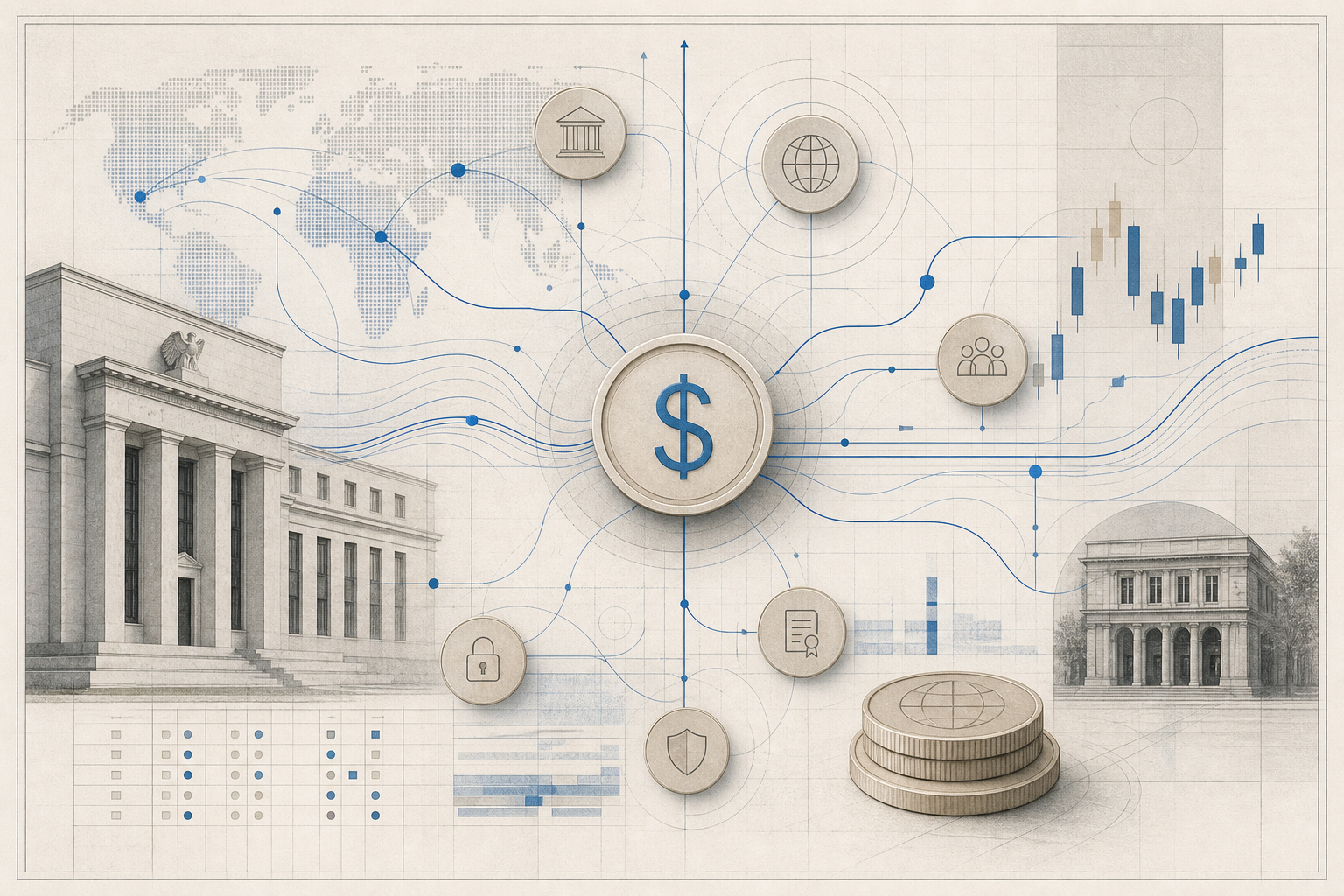
The latest stablecoin policy debate is no longer just about reserve transparency or payment efficiency. A new Bank for International Settlements working paper is pushing the discussion toward something more structural: whether dollar-backed tokens are becoming an alternate route into U.S. dollar exposure that sits partly outside the banking channels governments have historically tried to manage. That question moved back into focus after The Block highlighted the BIS research on Wednesday, drawing attention to a set of findings that matter far beyond crypto market plumbing.
The BIS paper, published on 21 July, compares foreign-currency bank deposits with inflows into dollar-pegged stablecoins across more than 130 economies. Its framing is important. Rather than treating stablecoins as an isolated crypto product, the authors place them alongside older forms of dollarization that policymakers in emerging markets already know well. In that comparison, stablecoins look less like a niche trading tool and more like a digital extension of the global dollar system. The researchers argue that both conventional deposit dollarization and stablecoin usage tend to rise around similar pressures, including exchange-rate instability and episodes of sovereign or banking stress.
That overlap matters because it suggests the demand signal is not mainly speculative. In many jurisdictions, households and businesses reach for dollars when confidence in the local currency weakens or when financial conditions deteriorate. The BIS research indicates that stablecoins can now serve that same function, but with different rails. The paper also finds that both deposit-based and token-based dollar exposure can be persistent once established, which means adoption may not fade quickly even if immediate macro conditions improve. For central banks, that turns stablecoins from a marginal innovation story into a medium-term monetary and financial-stability issue.
The most consequential conclusion is the one that drew the headline attention: stablecoin flows appear far less responsive to foreign-exchange and capital-flow restrictions than bank deposits are. In practical terms, that means the traditional toolkit used to slow cross-border dollarization may be weaker when users can move into tokenized dollars through wallets, exchanges and blockchain settlement networks instead of regulated deposit channels. The paper does not claim controls become irrelevant, and it does not argue that all stablecoin activity escapes regulation. But it does point to a meaningful asymmetry. Where bank-based dollar access can be constrained through domestic supervisory and banking rules, token-based access may remain easier to reach because part of the activity takes place outside the perimeter that normally carries those controls.
That finding also fits with the BIS's broader line on stablecoins. In its 2026 Annual Economic Report, the institution argued that current stablecoin arrangements still fall short of the standards money must meet at scale. The report points to recurring problems around par convertibility in secondary markets, fragmented blockchain infrastructure, limits on elasticity and interoperability, and integrity risks tied to unhosted wallets. Put differently, the BIS is not saying stablecoins are becoming superior money. It is saying they are already influential enough to create policy spillovers even while the underlying arrangements remain operationally and institutionally incomplete.
For emerging-market policymakers, the real issue is what happens when those two ideas are combined. If stablecoins are imperfect monetary instruments but still offer fast access to digital dollars, then they can exert pressure on exchange-rate management, deposit bases and cross-border surveillance before they are fully embedded in the regulated financial stack. That does not automatically translate into bans or blanket prohibitions. More likely, it increases pressure for tighter rules around wallet onboarding, exchange supervision, reserve disclosures, redemption pathways and the treatment of offshore stablecoin activity. It also raises a harder strategic question: whether countries can reduce demand for foreign stablecoins only through enforcement, or whether they also need stronger domestic macro credibility and more competitive local payment systems.
The near-term implication for the market is that stablecoin regulation is likely to be argued on two tracks at once. In the United States and other major jurisdictions, lawmakers and supervisors are still focused on issuer safety, reserve quality and settlement utility. In emerging markets, the conversation is broader and more defensive, touching on capital mobility, dollar substitution and monetary sovereignty. The BIS paper gives that second debate a more empirical footing. As stablecoins become more deeply integrated into payments, trading and treasury operations, the policy question is no longer whether they resemble money enough to matter. It is whether governments can still govern cross-border dollar access using tools built for an earlier financial architecture.