BIS paper puts stablecoins at the center of the next capital-controls debate
A new BIS working paper argues that dollar-backed stablecoins are creating a harder-to-contain channel for cross-border dollarization in emerging markets. The finding matters because stablecoin adoption is scaling faster than many traditional policy tools were designed to handle.
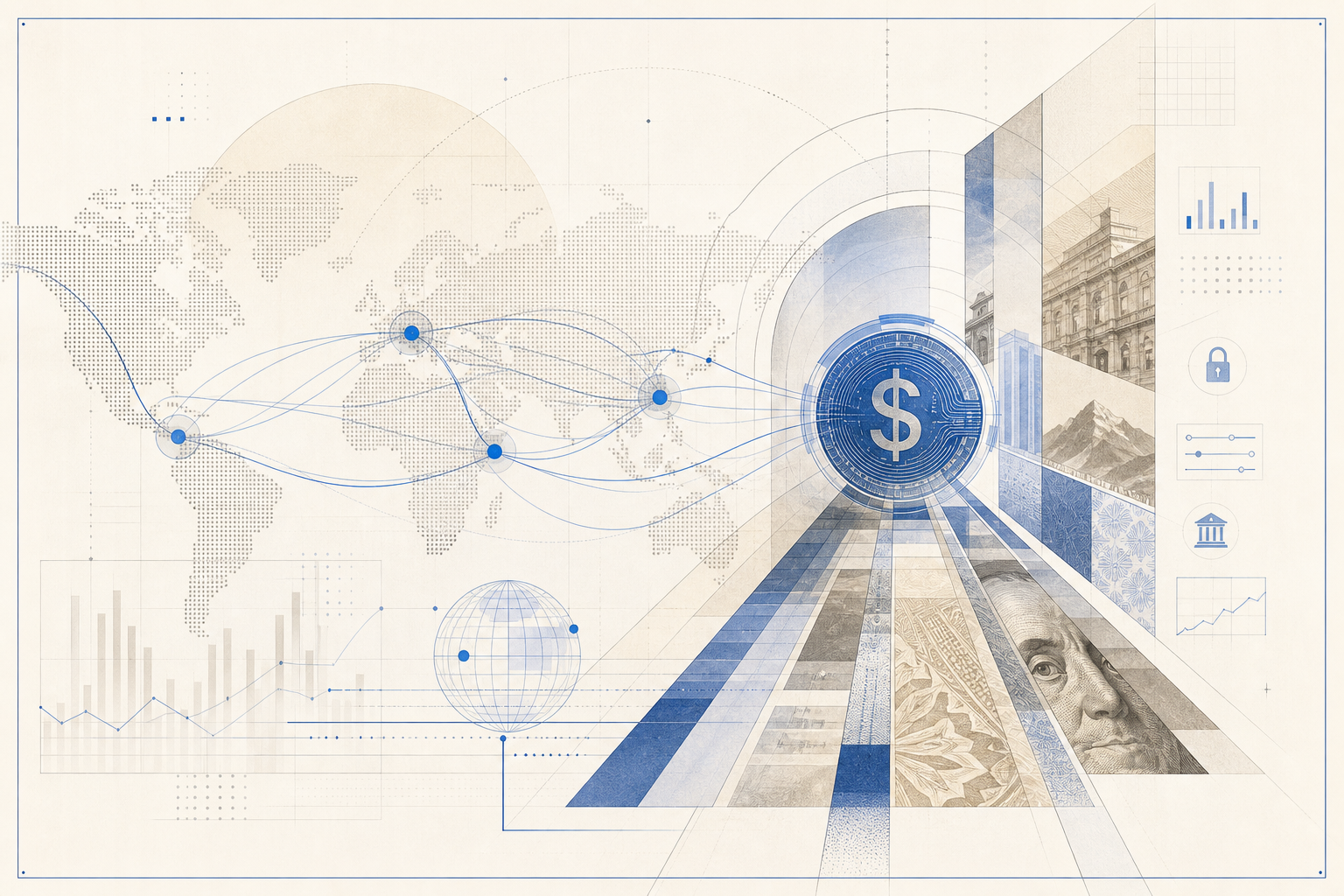
A new Bank for International Settlements working paper is pushing stablecoins out of the payments novelty bucket and into a more consequential policy conversation: whether digital dollars are becoming a parallel channel for cross-border capital movement in economies that have historically relied on bank regulation and FX restrictions to manage monetary control. For RWA and stablecoin markets, that is a meaningful shift. The question is no longer just whether tokenized dollars are useful for settlement, remittances, and crypto market plumbing. It is whether they are starting to behave like a durable macro-financial rail that can weaken the practical reach of capital controls in emerging markets.
The BIS paper, published in July as Working Paper No. 1370, compares conventional foreign-currency deposit dollarization with what its authors call “stablecoin dollarisation” across more than 130 economies. Its central finding is that both forms of dollar demand tend to rise under similar conditions, especially where exchange-rate pass-through is strong and where sovereign or banking stress raises doubts about the domestic financial system. But the paper draws a sharper distinction when it comes to policy response. Historical capital controls and account restrictions have generally reduced deposit dollarization. In the BIS data, those same frictions appear to have little measurable effect on stablecoin-based dollarization.
That divergence is what makes the paper notable for market operators. Stablecoins move through wallets, exchanges, and blockchain networks that can sit partly outside the channels governments traditionally monitor most closely. The BIS authors explicitly argue that these tokens circulate at least partly outside the conventional regulatory perimeter, which helps explain why the old tools may translate poorly to an onchain environment. That does not mean every stablecoin transfer bypasses supervision or that policymakers are powerless. It does mean the enforcement surface is broader, more fragmented, and more dependent on digital intermediaries than the bank-led model that capital controls were originally built around.
The macro backdrop makes the issue more than theoretical. DefiLlama data shows total stablecoin market capitalization at roughly $309.8 billion, with USDT accounting for about 59.5% of the market and USDC remaining the second-largest dollar token. At that scale, stablecoins are no longer a marginal crypto wrapper around cash. They are a large and still-growing distribution layer for dollar liquidity, increasingly used across trading, treasury management, cross-border transfers, and access to dollar-denominated value in jurisdictions where local currency stability cannot be taken for granted. The larger that float becomes, the harder it is for policymakers to dismiss stablecoin usage as a niche edge case.
The BIS paper is also more measured than the most alarmist interpretations. It does not claim that stablecoins automatically break monetary policy transmission everywhere, and it finds limited evidence that deposit dollarization by itself destroys the standard policy channel. What it does suggest is that deeper dollarization has been associated with somewhat higher inflation risk and that both deposit-based and token-based dollarization can be persistent once established. In practical terms, policymakers may not lose control overnight, but reversing the trend can be difficult once households and firms begin treating dollar instruments as their more reliable store of value.
For RWA builders and stablecoin issuers, the commercial implication is straightforward: demand is likely to remain strongest where users value speed, portability, and access to dollar exposure more than the abstractions of traditional bank account infrastructure. But that same demand profile is likely to attract heavier scrutiny around reserve quality, redemption pathways, sanctions controls, disclosure standards, and local distribution practices. As tokenized cash becomes more embedded in real-world economic activity, regulators are likely to focus less on whether stablecoins are “crypto” and more on whether they function as shadow payment and savings infrastructure in markets with fragile monetary sovereignty.
The broader RWA takeaway is that tokenized money and tokenized assets are converging into one policy stack. Stablecoins are the settlement leg for much of the onchain economy, and if they continue to expand in markets facing inflation pressure or FX restrictions, they will shape how governments think about tokenized treasuries, tokenized deposits, and cross-border investment products as well. The BIS paper does not settle the regulatory debate, but it makes one point harder to ignore: the digital dollar is not only competing with bank transfers anymore. In many markets, it is starting to compete with the state’s own ability to steer where savings and payments go.