Arcus is turning Robinhood Chain’s tokenized-equities thesis into a live trading product
Arcus has moved beyond launch messaging and started expanding Robinhood Chain’s onchain market stack with stock tokens, perpetuals and self-custodial trading rails. The combination matters because it gives the chain an application layer that can test whether tokenized equities can attract real order flow instead of just speculative attention.
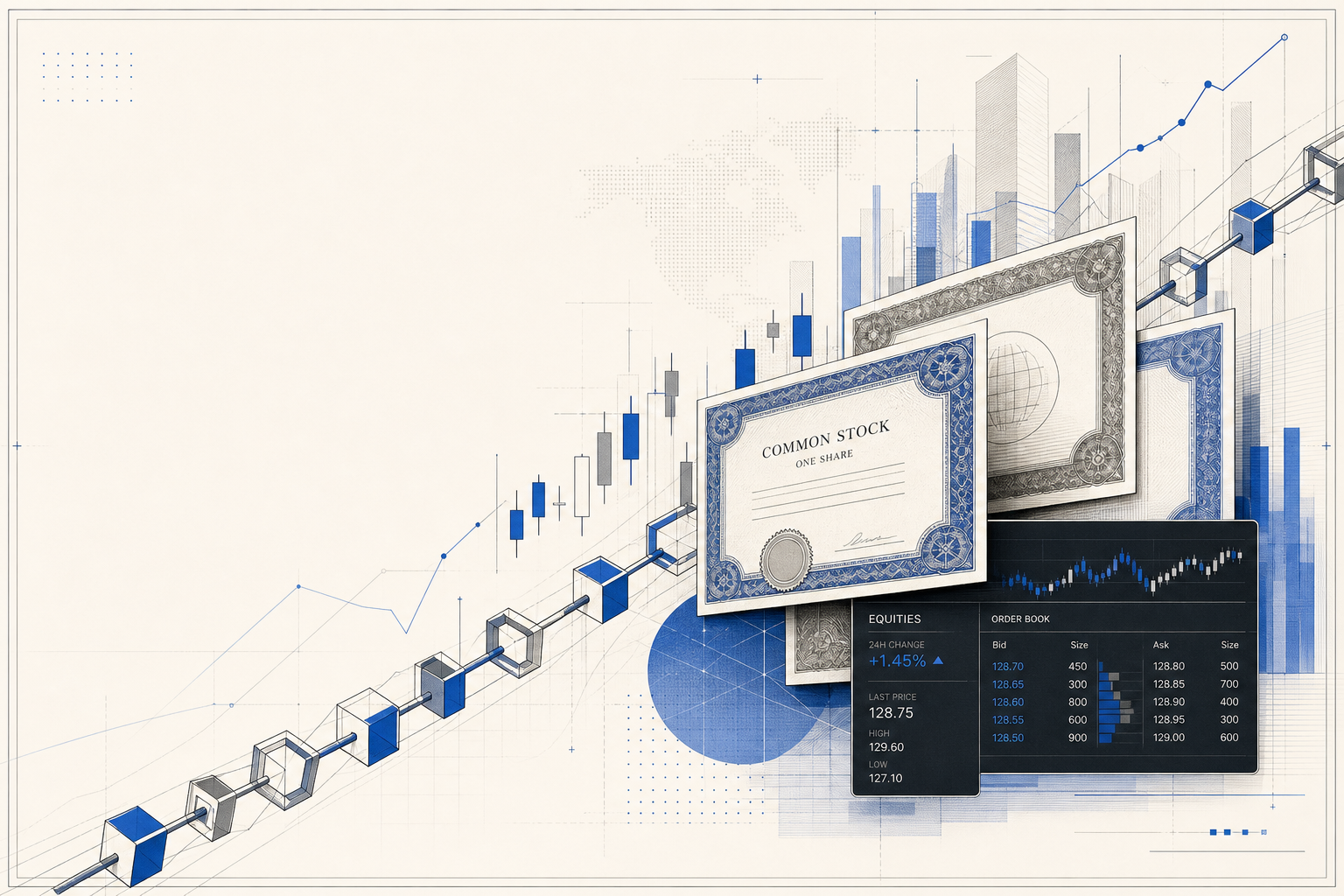
Arcus is giving Robinhood Chain an early proof point for what an onchain equities market could actually look like in production. The trading platform said this week that it has expanded into tokenized stocks and perpetual futures on Robinhood Chain, building on the spot-market launch it rolled out when the network went live earlier this month. That matters for RWA watchers because the story is no longer just that Robinhood wants a blockchain strategy. It is that a live venue is now trying to combine stock tokens, crypto assets and derivatives inside a self-custodial account model on infrastructure explicitly positioned for real-world assets.
The strongest signal comes from Arcus itself. In its July 1 launch note, the company said it built the exchange on Robinhood Chain to offer 24/7 access to 95 stock tokens alongside perpetuals, with the assets designed to move onchain rather than stay trapped inside a closed broker ledger. Arcus also framed the product around removing three long-standing frictions in traditional markets: geography, limited trading hours and the gatekeeping that keeps many users outside high-value financial products. Whether that promise stands up commercially is still an open question, but the product direction is clear. Arcus is not treating tokenized equities as a side feature. It is making them central to how the venue differentiates itself.
Robinhood’s own materials make the broader infrastructure thesis easier to verify. On the Robinhood Chain site, the company describes the network as a permissionless layer-2 blockchain built for financial services and real-world assets, and it explicitly highlights stock tokens tied to names such as NVIDIA, Google and Apple. The chain’s documentation goes further, saying the network is optimized for tokenized real-world assets including equities, ETFs and private assets. That is important context for this launch. Arcus is not improvising on a generic chain. It is plugging into a network whose operator is already telling developers and users that tokenized securities are a core design target.
The Arcus rollout also sharpens the distinction between application-layer growth and protocol governance. The dYdX Foundation said on July 1 that Arcus is a separate product created by dYdX Labs in partnership with Robinhood and that the community-owned dYdX Chain remains operationally unchanged. That clarification matters because it shows Arcus is being pursued as a new commercial trading venue rather than as a migration of the existing dYdX chain community. For the RWA market, that separation lowers one source of confusion: the tokenized-equities push is not dependent on rewriting dYdX Chain governance or forcing a protocol-level merger. It can advance as a standalone business and distribution effort.
From a market-structure perspective, the interesting part is the combination of self-custody, token mobility and always-open access. Traditional brokerage models can already offer synthetic after-hours access, but they usually keep the full stack inside one institution’s walls. Arcus is trying something different. Its own launch materials say every stock token on the venue is issued from and redeemable against Robinhood Chain infrastructure and can be self-custodied and moved into DeFi environments. If that works as advertised, the token is no longer just a user interface abstraction. It becomes a reusable onchain financial primitive that market makers, lenders and other applications may be able to build around.
That possibility is exactly why this launch deserves attention even before there is evidence of meaningful volume. Tokenized-equities projects often stall because they solve distribution before they solve composability, or they solve custody before they solve market access. Arcus is attempting to bundle those pieces together: stock-token access, perpetual trading, onchain settlement and a chain operator that wants more financial applications built around the same assets. In principle, that gives Robinhood Chain a better shot at developing an ecosystem instead of just a single token wrapper product. In practice, the model will still need to prove liquidity quality, redemption reliability, jurisdictional controls and resilience during periods of market stress.
There are also unresolved product questions that will determine how far this can go. Investors will want clarity on who stands behind the underlying instruments, how closely the stock tokens track the reference assets outside U.S. market hours, what rights token holders actually receive, and how corporate actions or suspensions are handled. Those issues are not secondary details. In tokenized equities, they define whether a product is credible capital-markets infrastructure or simply a convenient trading proxy with limited legal or economic transparency. The fact that Robinhood Chain documentation openly centers RWAs and stock tokens raises the stakes, because the market will expect operational answers rather than broad vision statements.
Even so, Arcus appears to qualify as one of the more concrete tokenized-equities deployments to emerge this month. The venue has a first-party product explanation, Robinhood has published a chain-level RWA thesis that matches the rollout, and the dYdX Foundation has clarified how the new venue sits beside the existing dYdX Chain. Put together, those signals suggest this is not a loose branding exercise. It is an attempt to create a reusable onchain market structure around tokenized stocks at a time when major crypto and brokerage platforms are racing to own the user relationship for regulated-like digital assets.
For RWA Trails readers, the implication is straightforward. Arcus should be watched less as a one-day launch headline and more as a live test of whether tokenized equities can become composable trading inventory on a general-purpose financial chain. If the venue can pair credible issuance and redemption mechanics with real liquidity, it could help move tokenized stocks from marketing narrative toward durable market category. If it cannot, the episode will still be useful because it will show where the next bottlenecks are: legal packaging, collateral design, market making or cross-platform investor trust.