Alpaca Raises Fresh Capital as Tokenized Equity Infrastructure Scales Up
Alpaca has added $135 million in new equity and lined up another $300 million in debt financing, underscoring investor appetite for the regulated brokerage and custody layer behind tokenized equities. The raise stands out because it backs infrastructure, not just issuance, at a moment when tokenized stock distribution is widening across exchanges, brokers and fintechs.
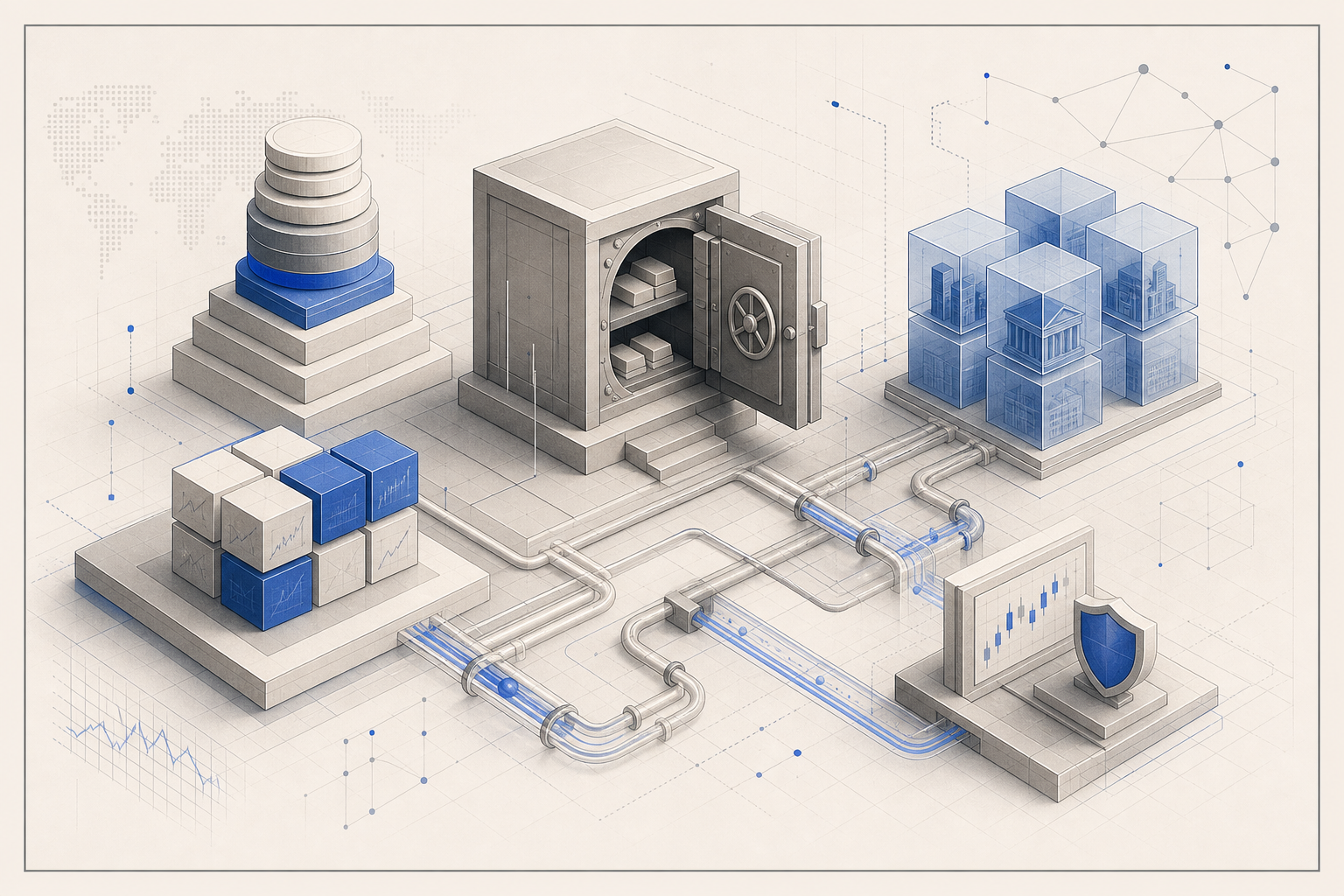
Alpaca has raised fresh capital to expand the brokerage and custody rails sitting underneath tokenized markets, adding one of the clearest recent signals that investors still see substantial upside in regulated financial infrastructure for RWAs. The company said it secured $135 million in equity financing led by Peak XV, with participation from Elefund, Opera Tech Ventures and Unbound, while total new financing reached $435 million once debt facilities were included. That debt component matters on its own: according to the company, the package includes financing primarily from Payward, the parent of Kraken, and BMO. The mix suggests investors are not only backing growth narratives around tokenization, but are also willing to finance balance-sheet-heavy infrastructure that supports real trading and custody flows.
Alpaca’s own positioning is explicit. The company says it will use the new capital to accelerate an agent-first brokerage platform and API-first prime brokerage stack that can serve both traditional and onchain financial products. That framing matters because tokenized equities do not scale on token design alone. They require licensed brokerage entities, custody processes for the underlying shares, capital support, local regulatory permissions and a technical layer that lets distribution partners plug in through APIs. In other words, the value is in the operating system around the tokenized asset, not only the token wrapper. The financing round reads as a vote of confidence that this operating layer is becoming investable in its own right.
The company also tied the raise to a wider set of operating milestones. Alpaca said it has now surpassed $1.5 billion in assets under custody for the underlying stocks backing tokenized equities, doubled revenue year over year for three consecutive years, and increased monthly active API users by nearly four times over the last six months. It also pointed to acquisitions and licensing work intended to widen its regulatory footprint, including a regulated presence in India’s GIFT City, licensed operations in the United Kingdom, and expanded European coverage through passported investment services. Those are the kinds of details institutional counterparties look for when deciding whether an infrastructure provider can support cross-border product rollout rather than just a narrow single-market use case.
Europe is an especially important part of that story. Earlier this month, Alpaca said it completed passporting of its regulated investment services across 29 countries in the European Economic Area through its Spain-based entity under the MiFID II framework. For tokenized-market operators, that kind of passporting does not solve every distribution question, but it does make the firm easier to underwrite as a regional infrastructure partner. Instead of stitching together separate local providers, fintechs and financial institutions can work through one authorized European entity for brokerage-linked investment services. That is exactly the sort of regulatory plumbing that becomes increasingly valuable when tokenized equities move from pilot demand to broader user acquisition.
The raise also stands out because it arrives as tokenized stock infrastructure is becoming more visible across crypto-native and hybrid financial platforms. Industry coverage has increasingly described Alpaca as a core backend provider for programs that need custody and brokerage connectivity for the underlying shares behind tokenized equity products. That is a different business from running a consumer venue or issuing branded assets directly. It is lower profile, but potentially harder to replace once partners integrate order routing, custody, compliance and funding flows into their own products. In RWA markets, those intermediated infrastructure layers often become the real bottlenecks and the real sources of pricing power.
There is also a broader market lesson here. Capital has become more selective across crypto, yet investors are still willing to write large checks for infrastructure that can bridge regulated securities markets and onchain distribution. Alpaca’s announcement follows its January Series D and pushes the company further into a category where scale, licensing and systems reliability can matter more than pure user growth. If tokenized equities are going to graduate from promotional launches into durable market structure, firms like Alpaca need to prove they can support issuance partners, exchanges, brokers and fintechs with the same operational discipline expected in conventional securities infrastructure. This round suggests backers believe that threshold is reachable.
The next test is execution. Alpaca now has to turn fresh capital into more distribution, more regulated coverage and deeper integration with the platforms building tokenized investment products on top of its stack. But the financing already says something important about where the RWA market is maturing. Investors are not only funding the front end of tokenization anymore. They are funding the licensed, capitalized and API-driven machinery underneath it. That is where tokenized equities either become a scalable market category or stall out as a series of isolated launches.